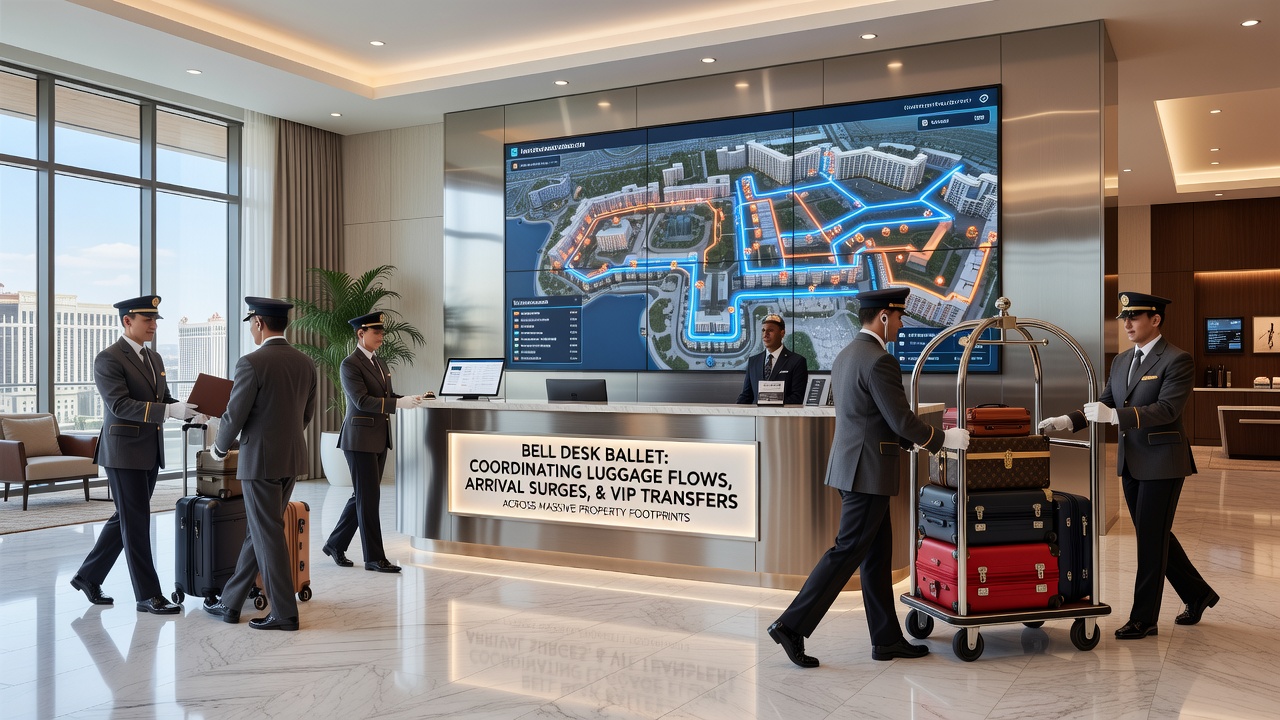
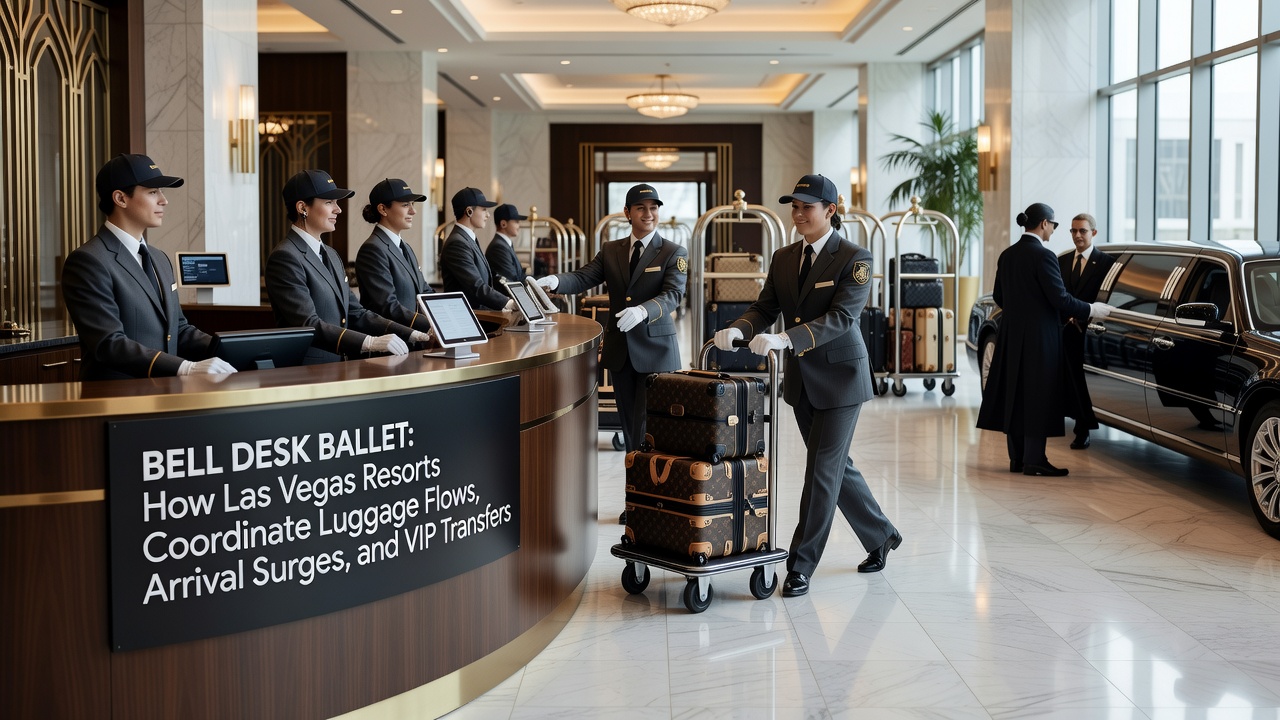
Bell Desk Ballet: How Las Vegas Resorts Coordinate Luggage Flows, Arrival Surges, and VIP Transfers Across Massive Property Footprints
Las Vegas resorts manage luggage operations through integrated bell desk systems that handle thousands of daily transfers across properties spanning millions of square feet, and these operations rely on radio dispatch networks, RFID tracking tags, and centralized software platforms to maintain flow during arrival surges. Staff teams at major properties such as those along the Strip use color-coded carts and zoned staging areas to separate standard guest bags from VIP deliveries, while dedicated elevators and service corridors prevent bottlenecks in public spaces.
Arrival Surges and Daily Coordination Patterns
Peak check-in windows occur between 3 p.m. and 7 p.m. on most weekdays, and resorts prepare by pre-positioning carts near valet and taxi ranks before tour buses arrive. Data from hospitality operations shows that properties with over 3,000 rooms often process 800 to 1,200 luggage pieces during a single surge, and teams divide responsibilities so that runners focus on high-volume lobbies while supervisors monitor digital dashboards for real-time updates. Resorts coordinate with shuttle services and airport transfer companies to receive advance passenger lists, allowing bell desk leads to allocate carts and assign staff before vehicles reach the property.
VIP Transfers and Specialized Routing
VIP guests receive priority routing through private entrances and dedicated service elevators that bypass main casino floors, and resorts maintain separate manifest logs for these transfers to ensure confidentiality and speed. Drivers and bell staff communicate via encrypted two-way radios that link directly to security command centers, and this setup allows quick adjustments when high-profile arrivals coincide with convention traffic. Properties extend the same protocols to group bookings from corporate events, where luggage from multiple flights must reach rooms within a two-hour window after registration opens.
Technology Systems Supporting Luggage Management
Many resorts deploy RFID tags on luggage tags that link to guest reservation numbers, and handheld scanners update central databases as bags move from curb to room. This system reduces lost-item incidents, and reports from the American Hotel & Lodging Association indicate that properties using integrated tracking see measurable decreases in retrieval time. Software platforms also integrate with property management systems to flag early check-ins or late departures, which helps teams stage carts in advance and free up space in bell closets during turnover periods. Underground tunnels and service roads at larger complexes allow carts to travel between towers without crossing guest areas, and these routes receive scheduled maintenance to handle the volume of motorized tugs used for bulk transfers.
Staff Training and Operational Protocols
Bell desk personnel complete certification programs that cover safe lifting techniques, cart maneuvering in crowded corridors, and customer interaction standards, and ongoing drills prepare teams for simultaneous surges from multiple arrival points. Supervisors conduct shift briefings that review weather forecasts, event schedules, and expected flight delays, since August 2026 brings several major conventions that historically increase daily luggage volume by 25 percent at Strip properties. Cross-training allows front desk agents to assist during overflow periods, and this flexibility keeps wait times for bag delivery under industry benchmarks even when multiple tour groups arrive within minutes of each other.
Handling Massive Property Footprints
Resorts spanning 50 acres or more maintain satellite bell desks at secondary towers and poolside areas, and these outposts receive direct radio feeds from the main command post to coordinate transfers without duplicating trips. Service elevators operate on timed schedules that prioritize VIP deliveries while maintaining steady movement for standard guest luggage, and maintenance crews inspect these systems nightly to prevent downtime during daytime peaks. Observers note that successful coordination depends on clear zoning maps posted in staff areas, which guide runners through the most efficient paths across connected buildings and parking structures.
Conclusion
Effective luggage coordination at Las Vegas resorts results from layered systems that combine technology, trained personnel, and physical infrastructure designed for high-volume movement. Properties continue to refine these operations through software upgrades and route optimization as visitor numbers fluctuate with seasonal events and convention calendars.