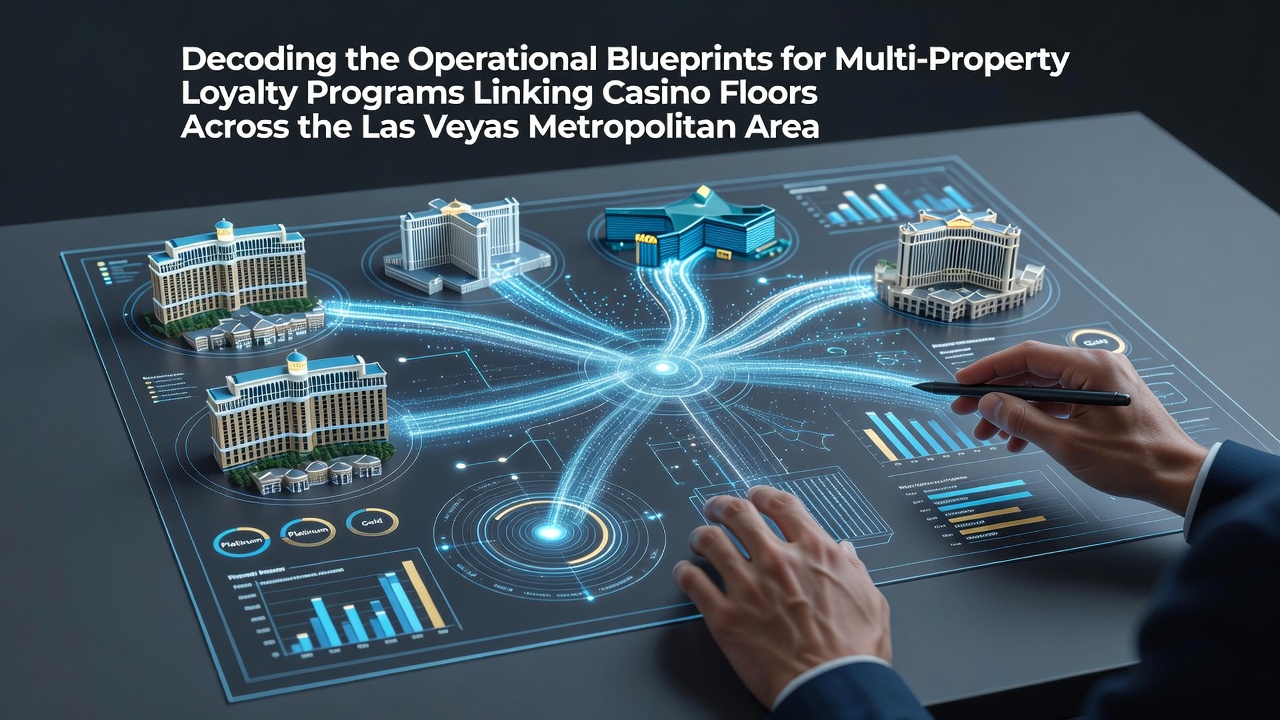
Decoding the operational blueprints for multi-property loyalty programs that link casino floors across the Las Vegas metropolitan area
Multi-property loyalty programs in Las Vegas operate through centralized databases that track player activity across dozens of casino floors from the Strip to off-Strip venues and downtown properties. These systems consolidate data from slot machines, table games, and hospitality services into unified player profiles that award tiered benefits based on total spend and play volume. Operators such as Caesars Entertainment and MGM Resorts maintain these networks to move guests between locations while maintaining consistent reward structures.
Core Architecture of Cross-Property Tracking
Player tracking begins at individual machines and tables where card readers capture real-time data on wagers, wins, and time spent. This information routes through property-level servers before syncing with a central platform that updates balances for points, comps, and tier credits across all linked venues. In August 2026 several major operators plan to complete upgrades to their backend systems that will reduce latency in cross-property updates from minutes to seconds. The Nevada Gaming Control Board oversees these integrations to ensure compliance with data security standards and accurate reporting of player activity.
Systems rely on secure APIs and encrypted data streams that prevent unauthorized access while allowing seamless transfers of player information between properties. When a guest plays at one casino floor their activity immediately reflects in the shared database so rewards earned at a downtown property can apply toward benefits at a Strip resort later the same day. This architecture supports dynamic offers that adjust based on a player's recent patterns across multiple locations.
Data Integration and Operational Workflows
Staff at each property access unified dashboards that display a guest's full history and current tier status regardless of where previous play occurred. Marketing teams use aggregated analytics to identify high-value players and trigger personalized promotions that encourage movement between linked casinos. Research from the American Gaming Association shows that coordinated loyalty programs increase repeat visitation rates by directing players toward underutilized floors during peak and off-peak hours.

Redemption processes follow standardized protocols so a free night earned at one property redeems at any participating location without additional paperwork. Backend algorithms monitor redemption patterns to balance inventory across hotel towers and prevent overbooking during high-demand periods. Observers note that these workflows require constant coordination between revenue management, IT, and floor operations teams to maintain accuracy.
Regulatory Oversight and Security Measures
The Nevada Gaming Control Board requires detailed logs of all data transfers between properties to verify that loyalty calculations remain fair and transparent. Audits examine how points convert across different game types and ensure that multi-property programs do not create unfair advantages for certain operators. Industry reports from the University of Nevada, Las Vegas Center for Gaming Research indicate that robust encryption and access controls have become standard since larger networks expanded in the early 2020s.
Operators also coordinate with local law enforcement on fraud prevention because unified profiles create single points of vulnerability if security lapses occur. Regular penetration testing and employee training programs help protect the shared systems that now handle millions of transactions each month across the metropolitan area.
Future Developments Scheduled for 2026
By August 2026 several programs plan to introduce mobile-first interfaces that let guests view real-time tier progress and redeem rewards directly from their phones while moving between properties. These updates will incorporate geofencing technology that sends location-specific offers when a player enters a linked casino. Data from pilot tests conducted in 2025 showed measurable increases in cross-property play when such notifications activate in real time.
Additional enhancements include deeper integration with non-gaming amenities such as restaurants and entertainment venues so loyalty points accumulate from dining and show tickets purchased at any connected location. This expansion broadens the data pool that feeds the central algorithms and refines the accuracy of predictive offers sent to guests.
Conclusion
Operational blueprints for these loyalty programs rest on synchronized databases, standardized redemption rules, and strict regulatory compliance that together enable seamless movement across Las Vegas casino floors. As systems evolve through 2026 the focus remains on secure data flows and coordinated workflows that support both operators and players without compromising oversight. The structure continues to expand while maintaining the core mechanisms that link activity from one property to rewards at another throughout the metropolitan area.