
Desert Data Flows: How Las Vegas Resorts Route Real-Time Analytics Through Underground Server Farms to Optimize Table Games and Guest Flows
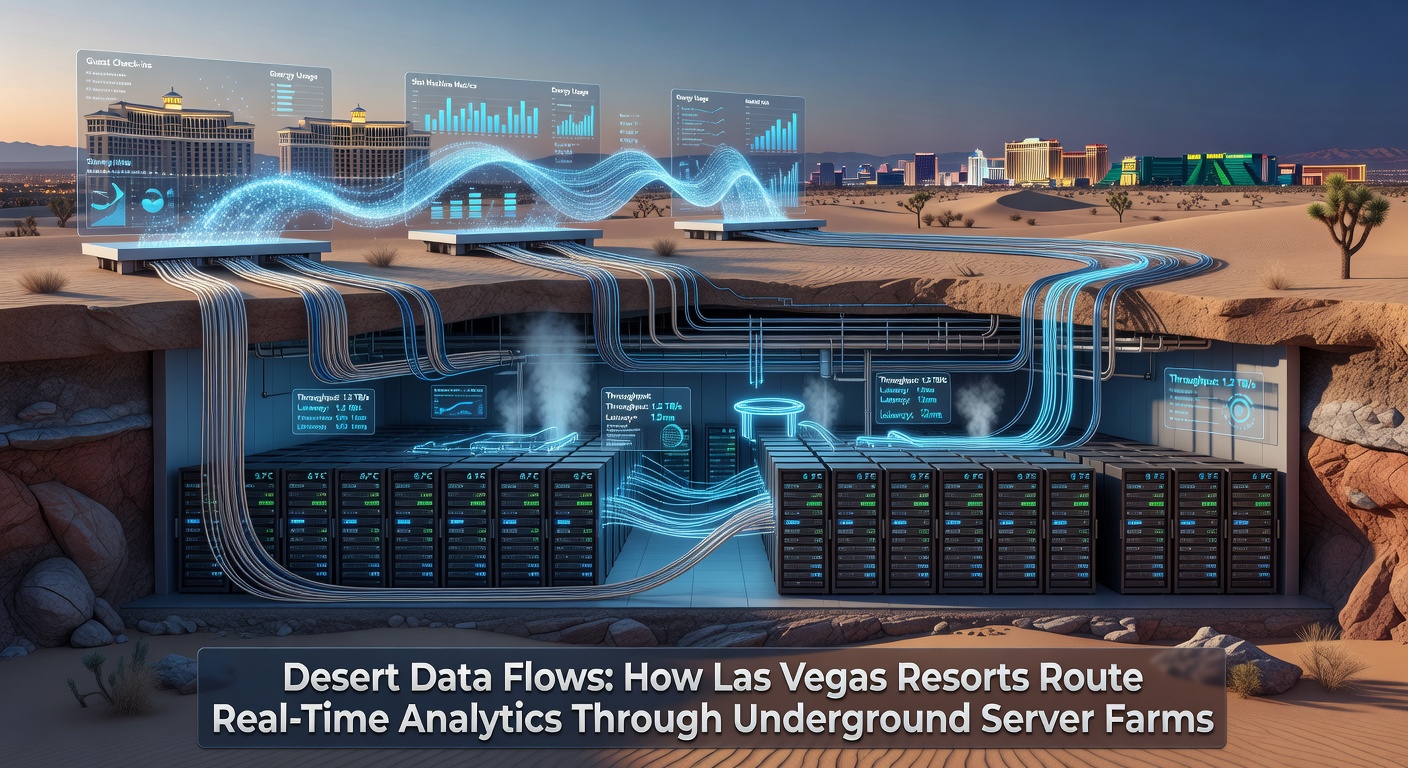
Las Vegas resorts maintain extensive underground server farms that collect, process, and route real-time analytics from casino floors to support decisions on table game placements and guest movement patterns. These facilities sit beneath major properties along the Strip and handle continuous streams of data generated by RFID chips, surveillance cameras, mobile apps, and floor sensors.
Operators transmit this information through dedicated fiber networks that connect gaming tables directly to the subsurface data centers, where high-capacity servers apply algorithms to identify trends in player activity and table utilization. The setup allows properties to adjust minimum bets, open or close specific games, and reallocate dealer staff based on live conditions rather than historical averages alone.
Underground Infrastructure and Data Routing
Resorts chose underground locations for server farms because the stable subsurface temperatures reduce cooling demands compared with above-ground facilities, while the depth provides additional physical security layers. Data enters these sites through redundant fiber lines that run parallel to utility corridors, ensuring uninterrupted transmission even during peak evening hours when guest volumes reach their highest levels.
Technicians monitor network latency and server load from control rooms located near the server farms themselves. When a spike in activity occurs at a particular bank of tables, the system flags the change within seconds and routes updated recommendations to floor supervisors via handheld devices. This process repeats continuously throughout each shift.
Table Game Optimization Through Analytics
Table games generate the majority of data points collected by the underground servers. RFID-embedded chips track bet sizes and durations, while overhead cameras feed computer vision models that estimate occupancy rates at each station. The combined dataset reaches the server farms where processing clusters calculate expected hold percentages and compare them against current floor configurations.
Properties have used these outputs to shift high-limit tables closer to high-traffic walkways during busy periods and to consolidate lower-limit games in secondary areas when foot traffic drops. In June 2026, several major resorts reported implementing updated routing protocols that shortened the interval between data collection and table reconfiguration from fifteen minutes to under five.
Guest Flow Management Systems
Beyond table games, the same underground infrastructure supports sensors positioned throughout hotel lobbies, restaurants, and entertainment venues. These devices measure dwell times and directional movement, sending aggregated counts to the central servers every thirty seconds. Algorithms then generate heat maps that highlight congestion points and suggest rerouting options for arriving tour groups or convention attendees.
Staff receive these maps on tablets linked to the same network backbone that serves the gaming analytics. When a particular entrance experiences sustained high volume, security and hospitality teams can open secondary pathways or adjust signage without waiting for manual reports. The underground servers maintain separate processing queues for guest-flow data to prevent gaming analytics from experiencing delays during large events.
Integration With Regulatory Reporting
Nevada Gaming Control Board requirements mandate that certain performance metrics remain available for review, and the server farms maintain partitioned storage that isolates reportable data from proprietary optimization models. Resorts transmit required summaries through encrypted channels that operate alongside the real-time analytics pipelines but do not share processing resources.
According to figures published by the Nevada Gaming Control Board, statewide table game revenue reached record levels in fiscal year 2025, with several properties attributing incremental gains to more precise floor adjustments enabled by underground analytics systems. Separate academic work conducted at the University of Nevada, Las Vegas has examined similar data pipelines in controlled studies that focus on operational efficiency rather than revenue outcomes.
Network Redundancy and Expansion Plans
Each underground facility incorporates multiple power feeds and backup generators sized to maintain full server operation during regional outages. Data replication occurs between neighboring properties so that a localized hardware issue does not interrupt analytics for an entire resort. Expansion work scheduled for late 2026 will add additional rack space beneath two properties on the south end of the Strip, increasing total processing capacity by approximately thirty percent.
Engineers continue to test newer compression techniques that reduce the bandwidth required to move video feeds from the casino floor to the subsurface servers. These tests occur during overnight hours when overall system load remains lower, allowing incremental improvements without affecting daytime operations.
Conclusion
Underground server farms now form a core component of how Las Vegas resorts manage both table game performance and guest circulation. The combination of fiber routing, real-time processing, and partitioned storage enables properties to respond quickly to changing conditions while meeting regulatory obligations. Continued investment in these subsurface facilities indicates that data-driven floor management will remain central to resort operations in the years ahead.