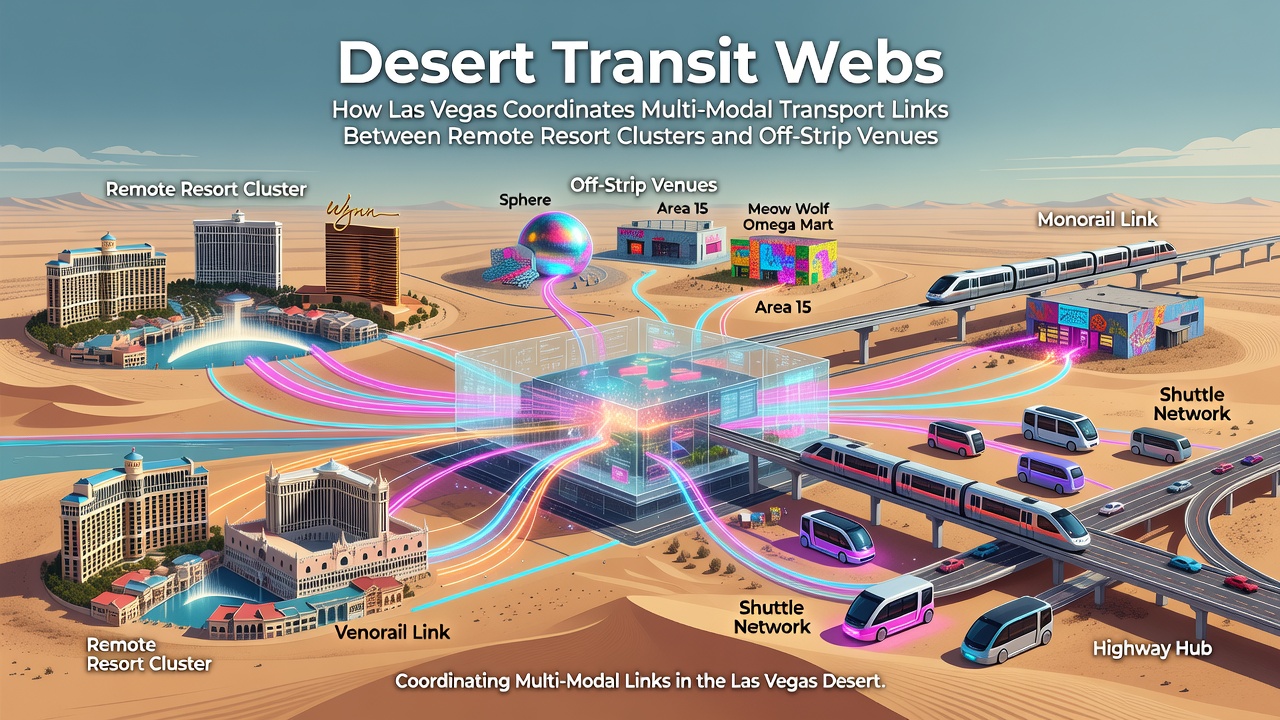
Desert Transit Webs: How Las Vegas Coordinates Multi-Modal Transport Links Between Remote Resort Clusters and Off-Strip Venues
Las Vegas spreads across a vast desert basin where resort clusters sit miles apart from the central Strip and off-Strip entertainment zones, so planners rely on coordinated multi-modal networks that blend buses, monorails, rideshare zones, and dedicated shuttles. The Regional Transportation Commission of Southern Nevada oversees much of this web, and data from its annual reports show that daily ridership across these routes exceeded 200,000 passengers in recent years, with peaks during major conventions and holiday weekends.
Remote resort clusters in areas like Summerlin and Henderson depend on timed connections that feed riders into the Las Vegas Monorail and RTC bus lines. Operators schedule shuttle departures to align with monorail arrivals at stations such as Harrah's and Flamingo, which cuts transfer times to under ten minutes during peak hours. This synchronization draws on real-time GPS feeds that adjust for traffic on I-15 and surface streets, allowing dispatchers to reroute vehicles when construction or events block primary corridors.
Core Components of the Network
The monorail itself spans 3.9 miles and serves seven stations, yet its reach expands through feeder services that include private resort shuttles and public buses equipped with bike racks for last-mile options. Off-Strip venues such as the Arts District and Downtown container parks receive direct express routes that bypass Strip congestion, and these lines run every fifteen minutes from 6 a.m. until 2 a.m. on weekdays.
Rideshare companies operate designated pickup zones at each major cluster, and the Nevada Transportation Authority requires geofencing that directs drivers to approved staging areas rather than curb-side stops inside resort property. This arrangement prevents bottlenecks while feeding passengers into the same bus and monorail hubs, and city records indicate that rideshare trips originating from remote resorts rose 18 percent between 2023 and 2025.
June 2026 Expansions on the Horizon
Planners have announced that new express bus corridors will launch in June 2026, connecting the expanding resort developments near Red Rock Canyon directly to the Fremont Street Experience. These routes will feature dedicated lanes during evening hours and will integrate with the existing Deuce bus line, which already carries more than 4 million passengers annually along the Strip corridor.
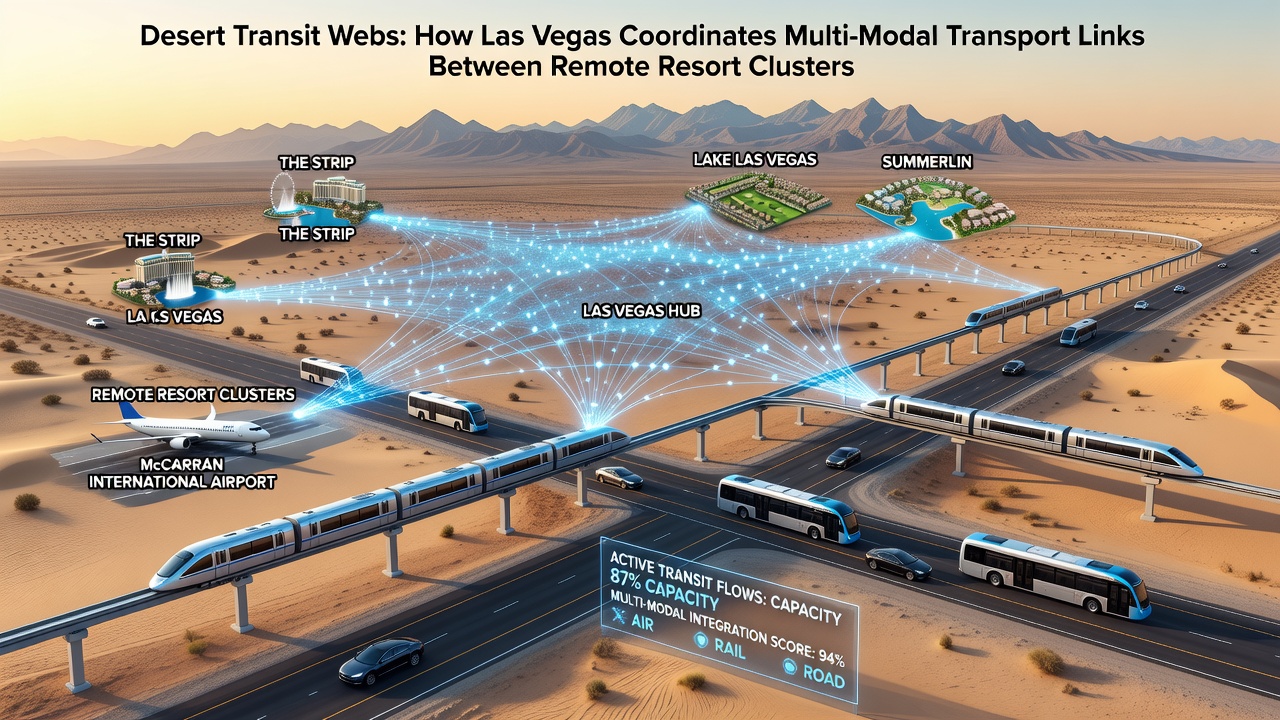
Technology underpins the entire system through a centralized data platform operated by the RTC. This platform merges arrival predictions from multiple operators into a single passenger app, and studies conducted by the University of Nevada, Las Vegas transportation research group confirm that real-time updates reduce average wait times by nearly three minutes per trip. Resorts contribute proprietary shuttle data to the platform under data-sharing agreements that protect proprietary occupancy figures while improving public coordination.
Challenges in Desert Conditions
Extreme summer temperatures above 110 degrees Fahrenheit force schedule buffers that account for slower boarding times as passengers seek air-conditioned shelters. Maintenance crews pre-cool vehicles at remote depots before they enter service, and operators track cabin temperatures through onboard sensors that trigger alerts when thresholds are exceeded. These measures keep service reliability above 92 percent even during July heat waves, according to RTC performance dashboards.
Funding for the network comes from a combination of hotel room taxes, federal grants administered through the Federal Transit Administration, and partnerships with major casino operators that underwrite specific routes serving their properties. A 2024 industry report from the American Public Transportation Association noted that Las Vegas ranks among the top ten U.S. cities for private-sector contributions to public transit, a model that sustains service levels without raising fares beyond the current $2 local rate.
Future Integration and Monitoring
Observers note that autonomous shuttle pilots have already completed test loops between select off-Strip venues and the nearest monorail stations, and regulators expect commercial deployment on limited routes by late 2027. These vehicles will operate at low speeds on dedicated paths, linking clusters that currently lack frequent bus coverage and providing 24-hour options during major events.
Performance metrics are published quarterly on the RTC website, allowing stakeholders to track on-time percentages, passenger loads, and transfer success rates across all modes. This transparency supports ongoing adjustments, such as the addition of late-night service on weekends when off-Strip music venues extend hours past 3 a.m.
Conclusion
Las Vegas continues to refine its desert transit webs through layered coordination that matches the geography of scattered resort clusters with the demand patterns of off-Strip venues. The combination of fixed infrastructure, flexible shuttle fleets, and data-driven scheduling keeps the system responsive to both daily commuters and seasonal visitors, while planned expansions in June 2026 will further tighten connections across the metro area.