From Plate to Payout: How Las Vegas Buffet Menus Double as Player Retention Tools in Casino Economics
Las Vegas casinos have long integrated buffet access into their loyalty frameworks, where menus featuring carved roasts, seafood stations, and dessert arrays function as calculated incentives that extend player dwell time at tables and machines. Data from the Nevada Gaming Control Board shows that complimentary dining programs correlate with measurable increases in average session lengths, as players redeem points earned through slot play or table wagers for meal credits that keep them on property rather than seeking external options.
Mechanics of Buffet Integration in Loyalty Systems
Casino operators structure buffet rewards through tiered player cards that track coin-in and time-on-device metrics, converting those figures into comp dollars redeemable at on-site buffets where the per-person food cost remains low relative to the house edge collected during extended visits. Researchers at the University of Nevada, Las Vegas have documented how these systems allocate buffet vouchers based on theoretical win calculations, ensuring that the value distributed stays below projected gaming revenue while encouraging repeat visits within the same trip.
August 2026 updates to several Strip properties introduced dynamic menu pricing tied directly to loyalty databases, allowing real-time adjustments that prioritize high-volume players with access to premium stations featuring wagyu carving and live sushi preparation. This approach builds on earlier models where fixed buffet passes served as entry-level retention tools for mid-tier cardholders, and the shift reflects broader industry data indicating that customized food incentives lift retention rates by aligning meal timing with peak gambling hours.
Economic Modeling Behind the Plate
Casino economics treat buffets as loss leaders whose operating margins are offset by increased table minimums and slot denominations played by guests who receive free or discounted entry. Industry reports compiled by the American Gaming Association reveal that properties allocate roughly 15 to 20 percent of marketing budgets to food comps, with buffets delivering higher redemption rates than show tickets or room upgrades because they require minimal advance planning and fit naturally between gaming sessions.
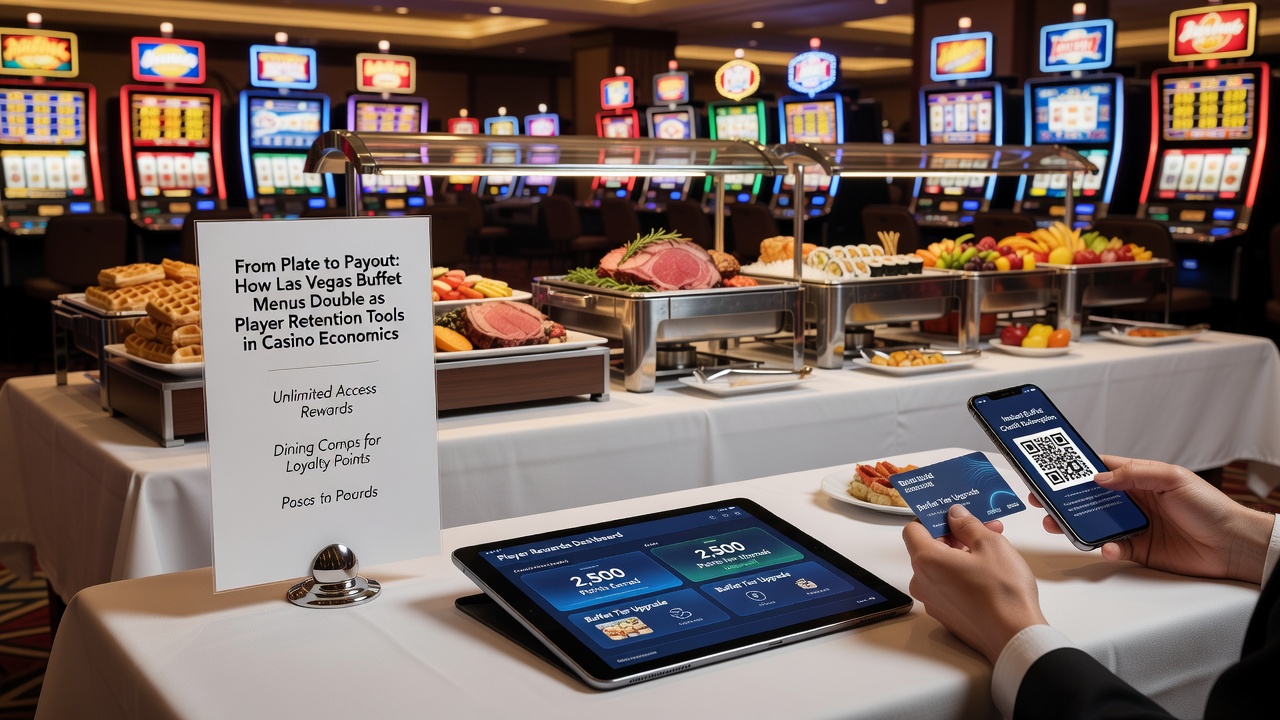
Analysts track these patterns through aggregated player data that links buffet redemptions to subsequent play volume, noting that guests who dine on-site spend an average of 45 additional minutes at machines compared with those who leave for off-property meals. The strategy relies on strategic placement of buffet entrances near high-traffic gaming zones, creating physical pathways that funnel satisfied diners back into the casino rather than toward exits or rival venues.
Player Behavior Patterns and Retention Data
Those who study gaming analytics observe that buffet menus influence decision-making at multiple points in a visit, from initial card signup when new players receive welcome meal offers to ongoing point accumulation that rewards consistent play with upgraded dining tiers. Figures released by the Nevada Resort Association indicate that properties with robust buffet comp programs maintain higher year-over-year player card renewal rates, particularly among locals who treat the buffet as a recurring benefit rather than a one-time perk.
Retention models further incorporate seasonal menu rotations that align with major events, such as expanded prime rib offerings during football season or holiday buffets that coincide with increased visitor traffic. These changes keep the incentive fresh while maintaining the core economic function of converting food service into prolonged gambling exposure, and operators monitor redemption spikes against corresponding rises in daily win per unit across slot floors.
Operational Adjustments in 2026
By August 2026 several major operators had expanded self-service buffet tracking through mobile apps that notify players of remaining comp balances and suggest optimal redemption windows based on current machine occupancy. This technology layer refines older paper voucher systems by reducing no-shows and allowing kitchens to forecast demand more accurately, which in turn supports tighter cost controls without diminishing the perceived value to cardholders.
Cross-property partnerships have also emerged, where loyalty networks let players redeem buffet credits at affiliated venues, extending the retention effect across multiple casino floors while distributing the economic load. Data shared among these networks shows consistent lifts in total play time when dining options remain within the same rewards ecosystem, reinforcing the principle that accessible, high-volume food service functions as a low-friction anchor for longer property stays.
Conclusion
Las Vegas buffet programs continue to evolve as precise instruments within broader casino retention strategies, where menu access directly supports the conversion of player activity into sustained revenue streams. The integration of loyalty tracking, operational data, and physical layout ensures that each plated meal contributes to extended engagement rather than serving as a standalone amenity, and ongoing refinements through 2026 demonstrate the model's adaptability to shifting player expectations and technological capabilities.