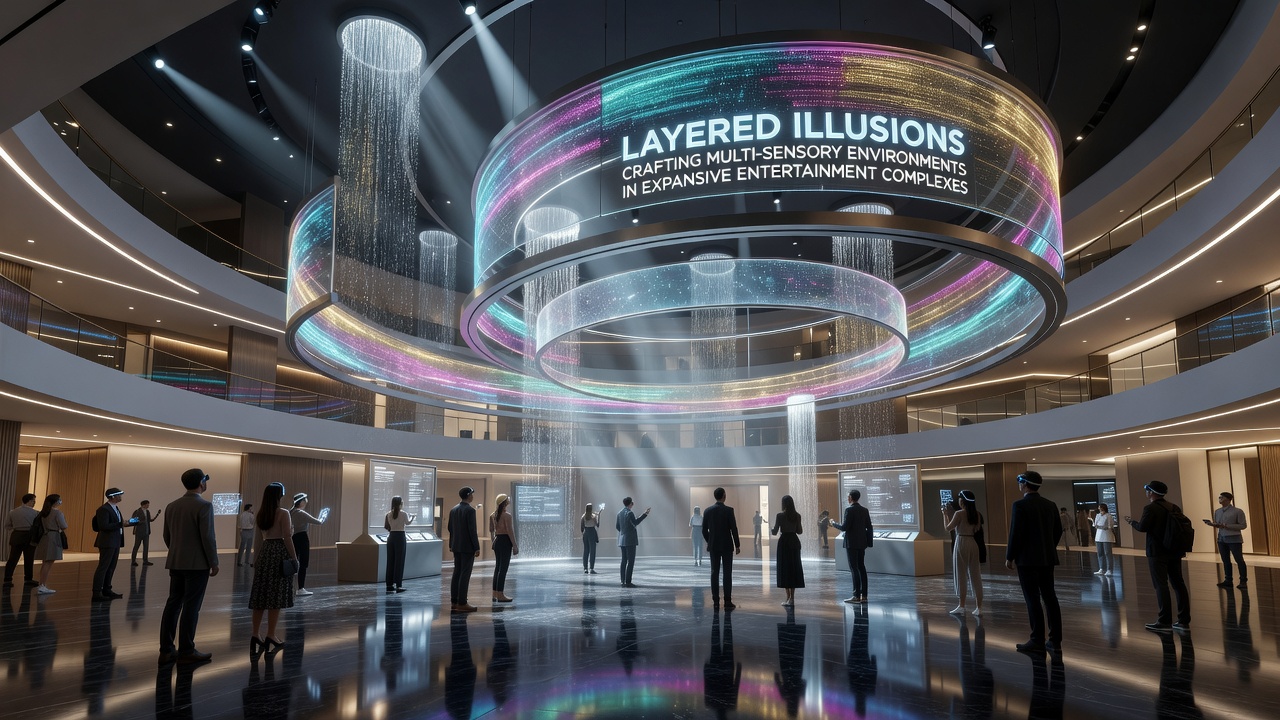
Layered Illusions: Crafting Multi-Sensory Environments in Expansive Entertainment Complexes
Entertainment complexes have evolved far beyond single-sense attractions, and designers now integrate visual, auditory, olfactory, and tactile elements into unified experiences that engage multiple human senses at once. These layered environments appear in theme parks, large-scale performance venues, and immersive museums across several continents, where teams coordinate technology layers to create consistent narratives that adapt to crowd movement and seasonal changes.
Core Components of Multi-Sensory Design
Visual systems form the foundation through high-resolution projection mapping and LED arrays that shift in real time, while audio engineers layer directional sound fields using beam-forming speakers that deliver distinct audio tracks to separate zones without bleed. Olfactory delivery systems release targeted scent molecules through HVAC-integrated diffusers that activate at precise narrative moments, and haptic surfaces embedded in floors and seating transmit low-frequency vibrations synchronized with on-screen or live action sequences. Temperature gradients controlled by zoned climate systems add another dimension, cooling or warming specific areas to reinforce environmental storytelling without affecting overall guest comfort.
Technological Integration Methods
Central control platforms combine data from motion sensors, guest tracking beacons, and environmental monitors to adjust all sensory outputs simultaneously, and facilities in Singapore and Orlando have documented how these systems reduce energy consumption by modulating output based on occupancy levels. Research from the University of Southern California’s Institute for Creative Technologies shows that synchronized multi-sensory cues increase reported immersion levels compared with visual-only presentations, while a 2024 report by the European Commission on digital cultural heritage highlights similar outcomes in interactive museum installations across member states. Engineers route these controls through fiber-optic networks that maintain sub-50-millisecond latency, allowing effects to respond instantly to live performer cues or automated triggers.
Implementation Across Global Venues
Facilities in Japan’s Universal Studios locations have incorporated scent-based storytelling in queue areas since 2019, whereas Australian entertainment districts use water-mist systems paired with wind simulation to replicate coastal conditions during aquatic shows. Canadian operators have adopted floor-embedded pressure sensors that trigger localized audio and lighting shifts when crowds gather in particular zones, creating dynamic pathways that guide movement without explicit signage. These approaches rely on modular hardware that allows seasonal reprogramming, so a single venue can host different sensory profiles throughout the year.
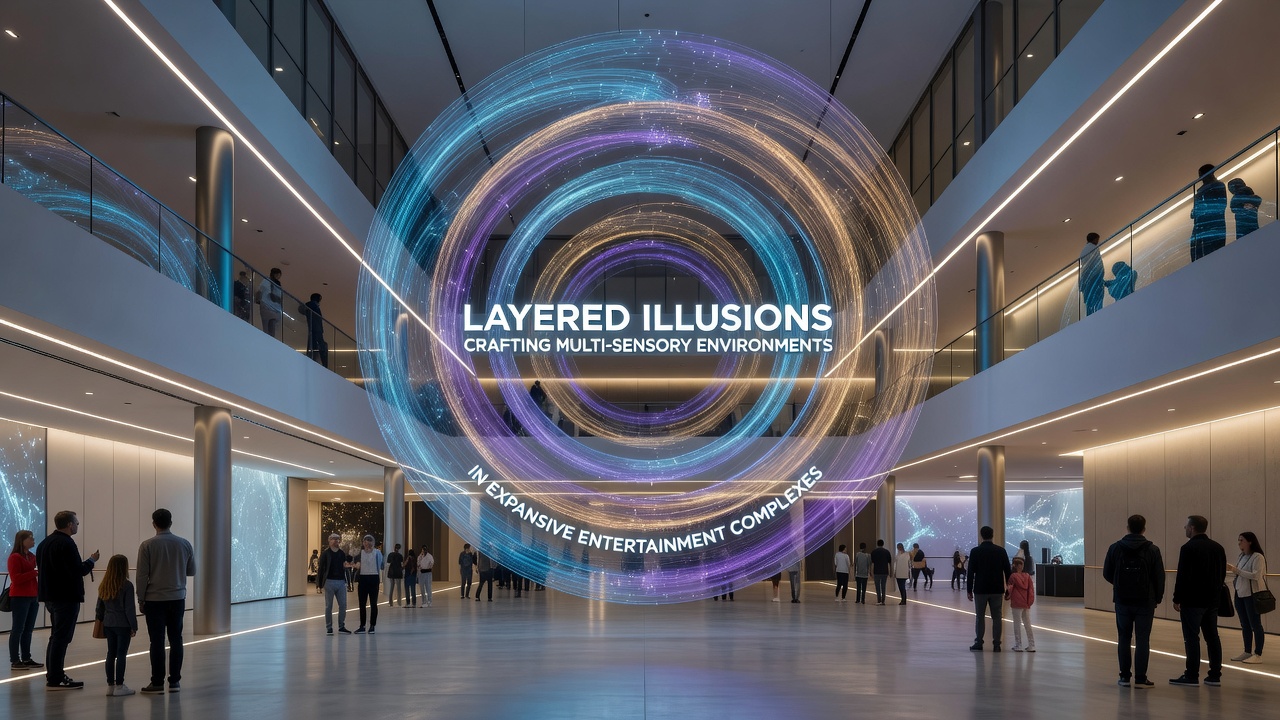
Maintenance protocols require cross-disciplinary teams that include scent chemists, acoustic specialists, and software developers who recalibrate systems quarterly, and data collected from wearable guest devices at select European parks indicate that properly balanced sensory layers correlate with longer dwell times and higher repeat-visit rates. Coordination between departments prevents one sense from overpowering others, a challenge addressed through iterative testing sessions that use both quantitative metrics and qualitative feedback from test groups.
Challenges in Scaling These Systems
Power management remains a primary constraint because simultaneous operation of projectors, speakers, diffusers, and haptic motors can exceed standard electrical loads in older structures, prompting operators to install dedicated micro-grids and battery storage arrays. Content synchronization across hundreds of devices demands robust timing protocols, and facilities have adopted precision time protocol standards originally developed for industrial automation to keep all outputs aligned. Regulatory compliance adds another layer, as building codes in multiple jurisdictions now specify maximum decibel levels, chemical emission limits for scents, and accessibility requirements for guests with sensory sensitivities.
Developments Anticipated by Mid-2026
Industry observers note that several complexes scheduled to open expansions in June 2026 will introduce AI-driven personalization, where individual guest profiles adjust scent intensity and haptic strength via mobile app preferences while preserving group-level synchronization. Pilot programs in South Korea have already tested eye-tracking cameras that modulate lighting brightness for specific audience members, and similar technology is expected to reach commercial deployment within the next eighteen months. Supply chain improvements for specialized scent cartridges and high-output haptic actuators are also projected to lower per-unit costs, enabling smaller venues to adopt scaled versions of these systems.
Conclusion
Multi-sensory environments continue to expand as hardware costs decline and integration software matures, allowing entertainment operators worldwide to deliver increasingly cohesive experiences that engage sight, sound, smell, touch, and temperature in coordinated sequences. Data from multiple regions shows measurable impacts on guest behavior and operational efficiency when these layers function together, and ongoing refinements scheduled through 2026 suggest further convergence between live performance, digital media, and environmental controls. The field now centers on precise calibration across disciplines rather than isolated effects, producing environments that feel unified to visitors even as behind-the-scenes systems manage thousands of individual cues.