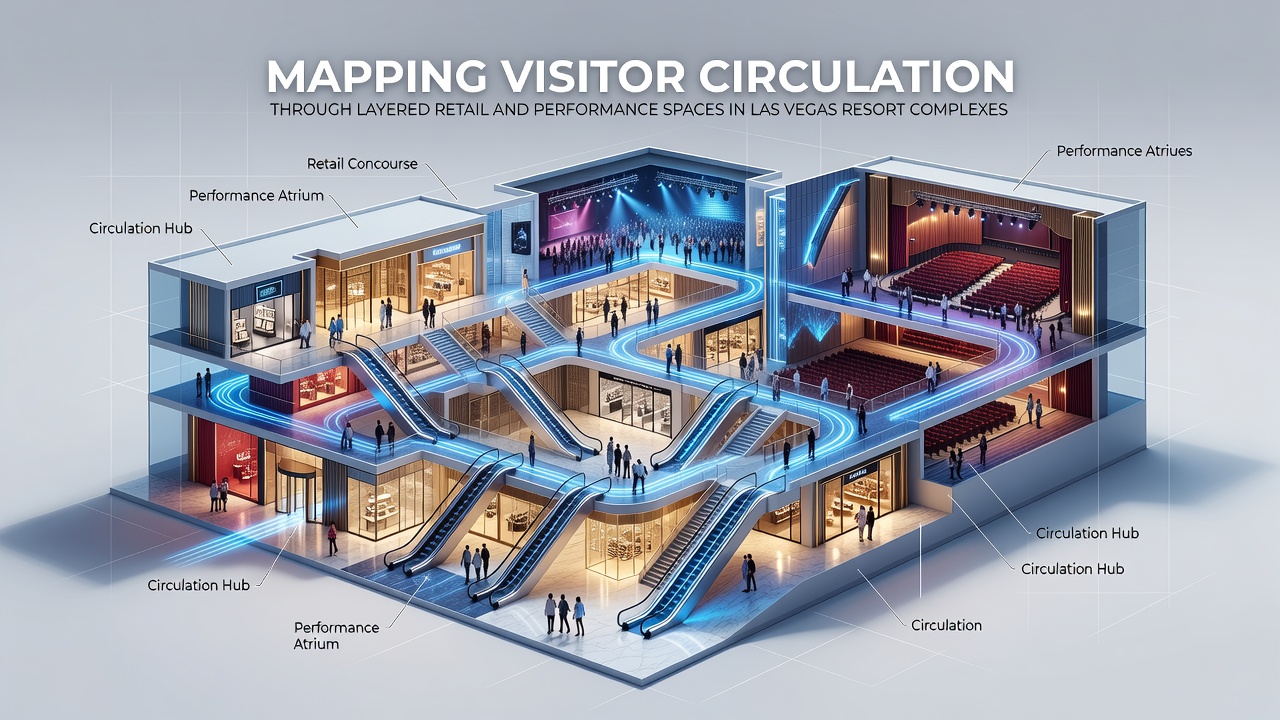
Mapping Visitor Circulation Through Layered Retail and Performance Spaces in Las Vegas Resort Complexes
Las Vegas resort complexes integrate retail zones and performance venues across multiple levels, and mapping visitor circulation reveals how people navigate these stacked environments through entrances, escalators, and connecting corridors. Data collected from sensors and cameras tracks movement patterns that shift based on show schedules, retail promotions, and time of day.
Layered Architecture and Flow Patterns
Resorts such as those along the Strip feature retail promenades on lower floors that connect directly to theaters and arenas above, creating vertical circulation routes that observers track with heat-mapping tools. Studies from the University of Nevada, Las Vegas show that visitors often follow predictable loops between shopping areas and performance spaces, with peak density occurring during evening hours when multiple events overlap.
Engineers install overhead sensors and floor-based counters to record these routes, and the resulting maps highlight bottlenecks near escalator banks where crowds converge after shows end. In complexes with four or more levels, circulation data indicates that guests prefer central atriums for transitions, while side corridors see lighter use unless featured displays draw them in.
Data Collection Methods in Practice
Resort operators combine anonymous Wi-Fi tracking with video analytics to build circulation models, and reports from the Las Vegas Convention and Visitors Authority confirm that these systems process millions of data points each month. Las Vegas Convention and Visitors Authority figures reveal average daily foot traffic exceeding 100,000 in major properties during summer peaks. Analysts overlay this information onto floor plans to identify underused pathways and adjust signage accordingly.
Performance schedules influence retail dwell times, with visitors lingering longer in stores immediately before or after concerts and stage productions. Mapping software flags these temporal clusters, allowing teams to deploy temporary barriers or staff during high-traffic windows such as those projected for August 2026 when multiple large-scale events coincide.
Retail and Performance Integration Examples
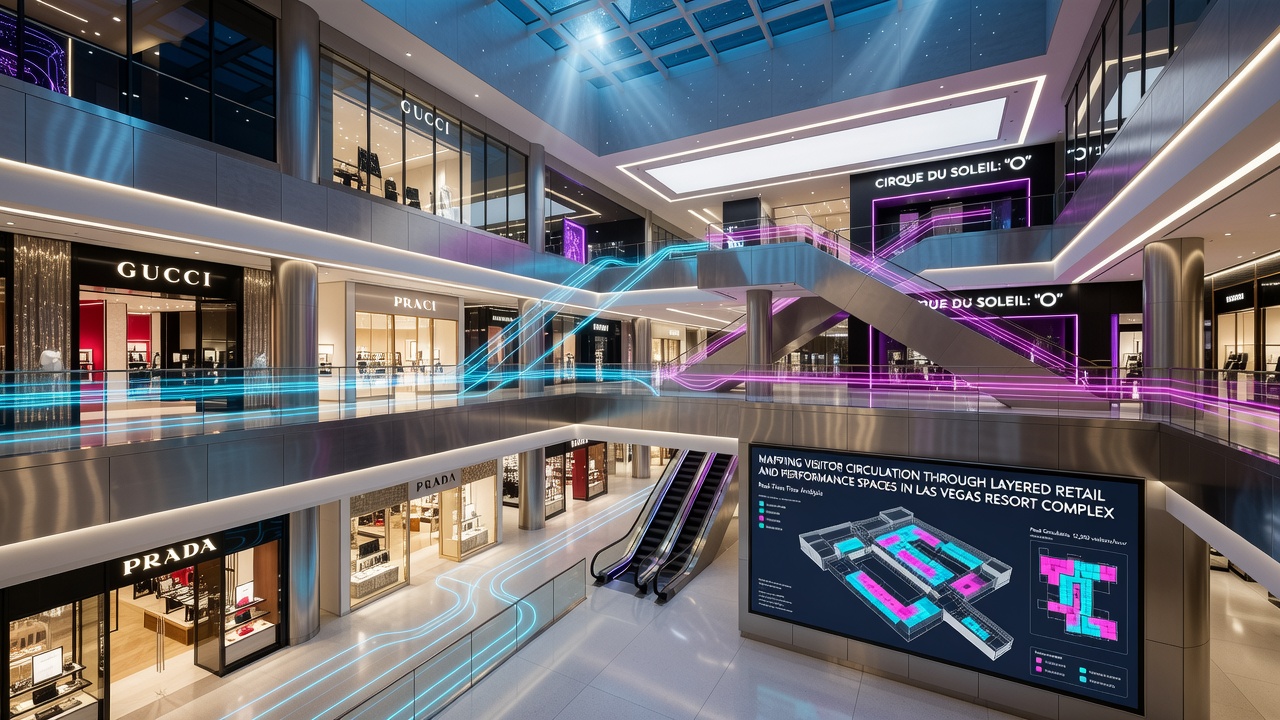
One complex links a three-story shopping arcade directly to a 4,000-seat theater via sky bridges, and circulation maps show that 60 percent of theater-goers enter through the retail zone rather than dedicated lobby doors. This pattern holds across several properties where performance tickets bundle with retail discounts, encouraging cross-traffic that designers anticipated during initial planning phases.
Ground-level casino floors feed visitors upward through escalators positioned near high-traffic gaming areas, and data logs indicate steady streams toward upper-level restaurants and bars once shows conclude. Observers note that these vertical connections reduce street-level congestion while distributing crowds across the full height of the building.
Challenges in Multi-Level Navigation
Wayfinding remains a persistent issue in layered spaces, particularly when architectural elements obscure sightlines between levels. Mapping projects identify zones where visitors pause to consult directories or mobile apps, and operators respond by installing digital kiosks that update in real time with performance start times and retail promotions.
Seasonal variations affect circulation volumes, with summer months bringing higher daytime retail traffic while winter evenings concentrate movement around indoor performance venues. August 2026 projections from industry models anticipate continued growth in these layered movements as new entertainment schedules roll out.
Conclusion
Circulation mapping in Las Vegas resort complexes continues to evolve through integrated sensor networks and schedule-aware modeling, providing operators with precise tools to manage layered retail and performance spaces. The resulting insights support adjustments that maintain efficient guest movement across multiple levels year-round.