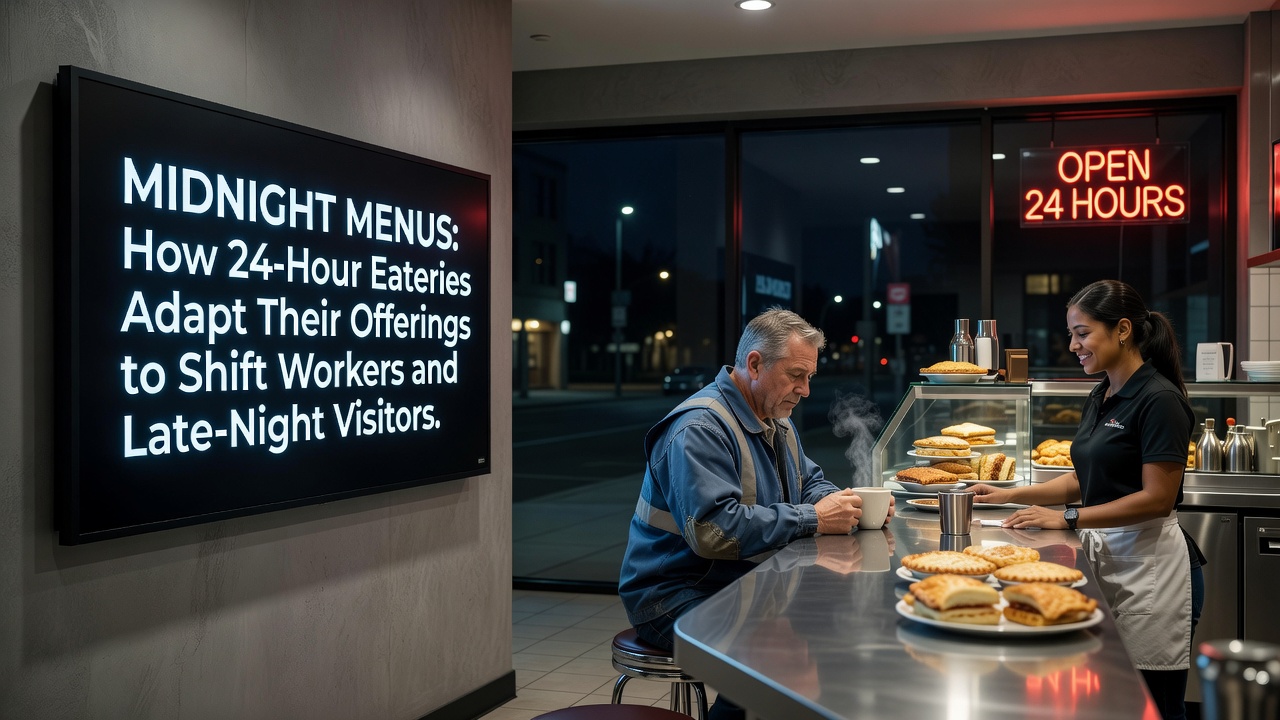
Midnight Menus: How 24-Hour Eateries Adapt Their Offerings to Shift Workers and Late-Night Visitors
Twenty-four-hour eateries in major hospitality hubs maintain continuous operations to serve both overnight employees and visitors who arrive after standard dining hours end, and these establishments modify their menus, service models, and supply schedules accordingly. Data from the U.S. Bureau of Labor Statistics shows that roughly 15 percent of the workforce follows nontraditional schedules that extend past midnight, which creates steady demand for accessible meals during those periods.
Menu Adjustments for Overnight Demand
Operators in cities with round-the-clock economies often keep breakfast items available throughout the night while introducing lighter fare such as salads, wraps, and protein-focused bowls that appeal to customers seeking quick energy without heavy preparation times. These changes reflect input from kitchen staff who track order patterns across multiple shifts rather than relying on daytime sales data alone. Establishments also rotate seasonal ingredients into late-night specials to reduce waste and maintain freshness when deliveries arrive at irregular intervals.
Staffing and Preparation Schedules
Preparation teams at many 24-hour locations begin prepping core components like sauces, doughs, and grilled proteins during afternoon hours so that overnight crews can assemble orders rapidly when volume spikes around shift changes. Research from the Australian Bureau of Statistics indicates that hospitality workers on evening and night rotations report higher satisfaction when employers provide consistent access to balanced meals during breaks, which encourages some chains to offer discounted employee meals drawn from the same adapted menus.
Supply deliveries frequently occur in staggered windows between 2 a.m. and 6 a.m. to avoid disrupting peak service periods, and inventory systems now incorporate real-time sales tracking that alerts managers when popular late-night items run low. This coordination helps prevent shortages that once forced substitutions during the busiest overnight hours.
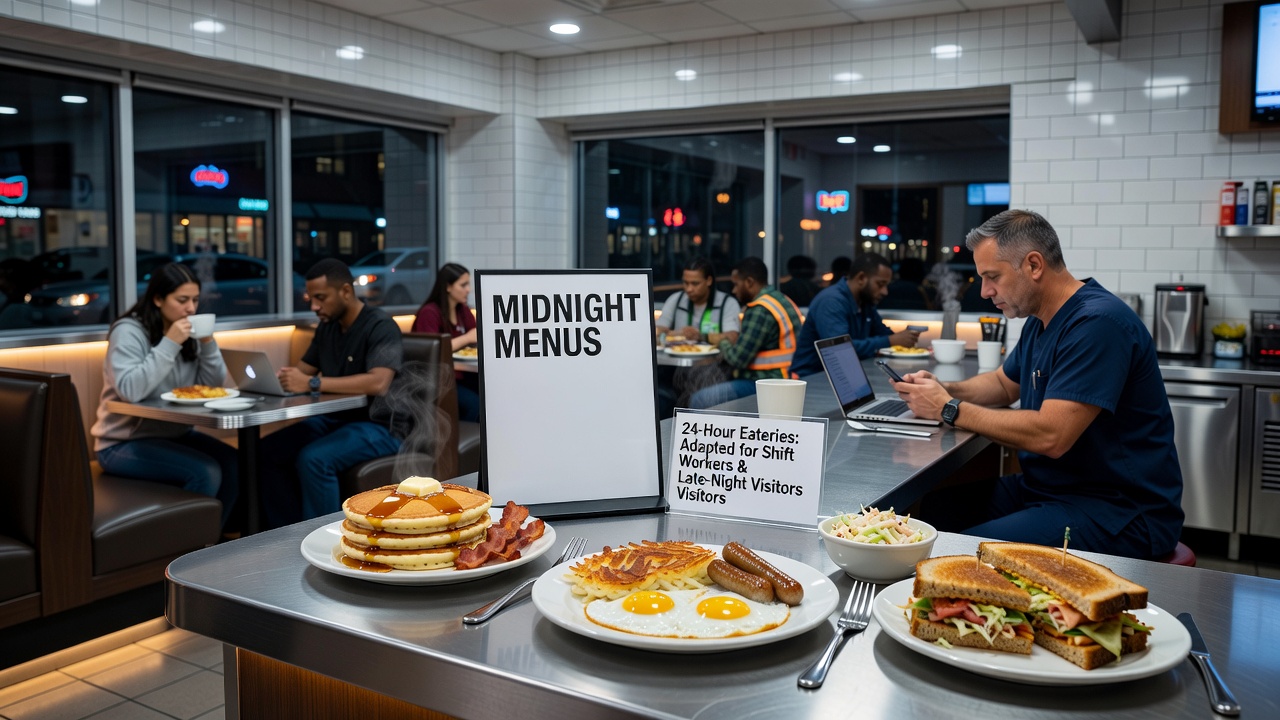
Accommodating Late-Night Visitors
Visitors who finish evening entertainment or arrive on red-eye flights often seek familiar comfort foods alongside quicker grab-and-go options, prompting many locations to maintain separate counters or digital ordering kiosks dedicated to faster transactions. Establishments track foot traffic patterns through point-of-sale analytics, which show consistent surges between 11 p.m. and 3 a.m. on weekends and during major events. In response, some venues extend limited bar menus that pair small plates with nonalcoholic beverages to capture additional revenue without expanding full kitchen operations.
Portion sizes sometimes shift toward smaller, shareable formats during overnight hours because data reveals that solo diners and small groups dominate after midnight. These adjustments help control food costs while still meeting the expectations of customers who may not have eaten since earlier in the day.
Operational Adaptations in August 2026
Beginning in August 2026 several regional chains introduced updated point-of-sale integrations that allow overnight managers to adjust menu availability dynamically based on delivery arrival times and remaining stock. These systems draw from supplier portals that update every fifteen minutes, reducing the frequency of last-minute substitutions that previously affected customer satisfaction scores. Observers note that such tools also support compliance with local health regulations regarding food holding times during extended service periods.
Industry reports from the National Restaurant Association highlight how operators continue to refine staffing models that pair experienced overnight cooks with newer hires who receive targeted training on simplified recipes designed for rapid execution. This approach maintains consistency across shifts while addressing the higher turnover rates documented among night-shift personnel.
Conclusion
Twenty-four-hour eateries sustain their viability by aligning menu selections, preparation timelines, and supply logistics with the documented rhythms of shift workers and late-night patrons. Continued refinements in data tracking and staffing practices allow these locations to respond to demand fluctuations without compromising food quality or operational efficiency, and ongoing adjustments ensure service remains viable across diverse customer groups throughout the night.