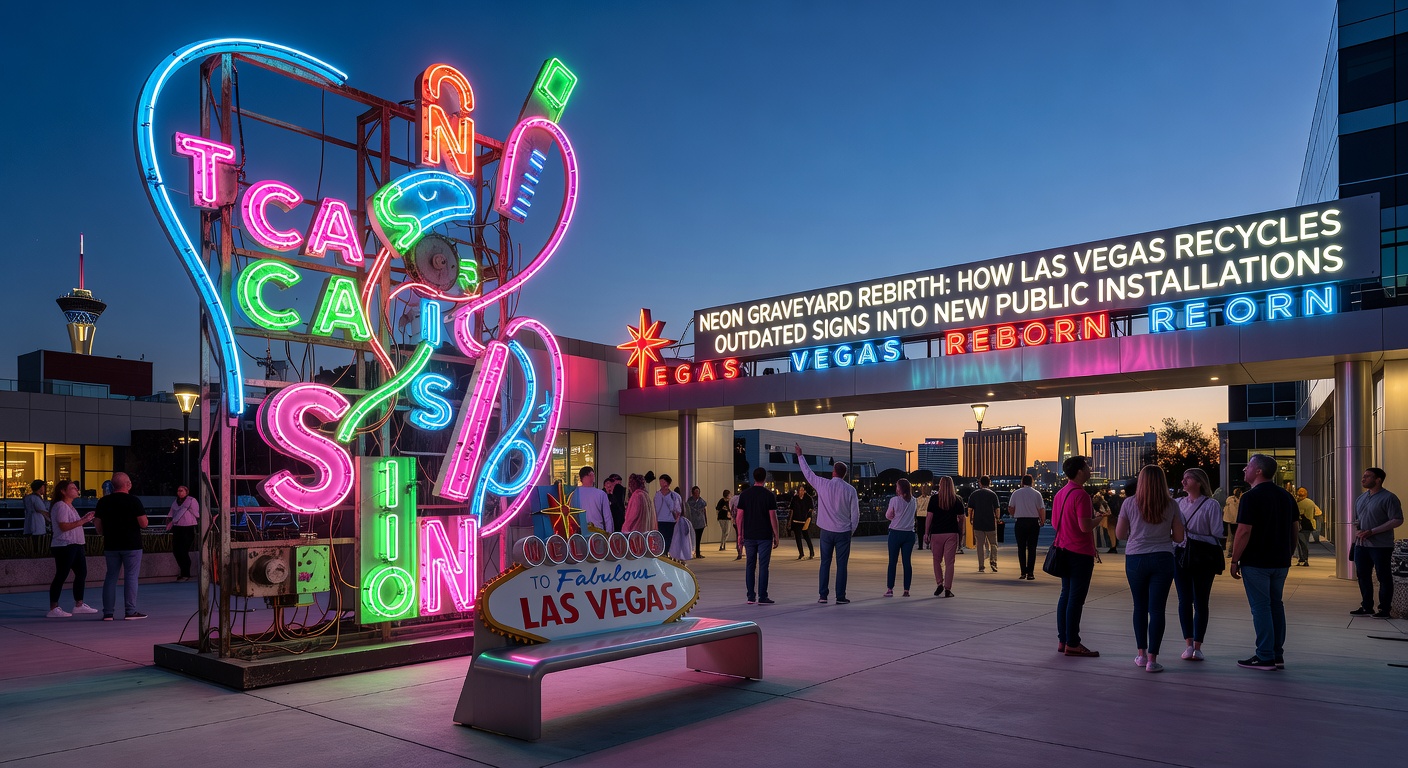
Neon Graveyard Rebirth: How Las Vegas Recycles Outdated Signs into New Public Installations
Las Vegas has long maintained a distinctive relationship with its neon heritage, and the process of collecting outdated signage has evolved into structured programs that emphasize reuse rather than disposal. The Neon Museum's Boneyard serves as the primary repository for signs removed from the Strip and downtown corridors, where pieces from the mid-twentieth century onward sit in organized storage yards until selected for restoration or adaptation into contemporary public works.
City records indicate that over four hundred individual signs have entered the collection since the Boneyard opened to structured preservation efforts in the early 1990s, with many components later incorporated into new installations along pedestrian pathways and community plazas. Workers document each arrival by photographing structural elements, cataloging electrical systems, and assessing glass tubing condition before any decision about future placement occurs.
Collection and Initial Assessment Procedures
Hotel operators and property developers coordinate with preservation staff when signs reach the end of their commercial lifespan, which often happens after corporate rebranding or major renovations. Once transported to the Boneyard, teams evaluate materials for structural integrity because many original frames contain steel that can be reinforced rather than replaced. Technicians remove remaining neon tubing carefully, store it separately, and photograph wiring diagrams so that future reinstallations maintain historical accuracy where possible.
Data compiled by the City of Las Vegas shows that approximately thirty signs undergo evaluation each year, and a subset of those components gets redirected toward public art projects instead of remaining in static display. This approach reduces landfill contributions while preserving visual references to earlier eras of the city's development.
Restoration Techniques and Material Reuse
Restoration crews employ both traditional glass-bending methods and modern LED substitutions when original neon cannot be revived safely. Transformers receive updates to meet current electrical codes, and mounting hardware gets fabricated to accommodate new locations such as roundabouts or park entrances. Observers note that roughly sixty percent of the metal frameworks from decommissioned signs can be adapted without full reconstruction, which lowers material costs for municipal projects.
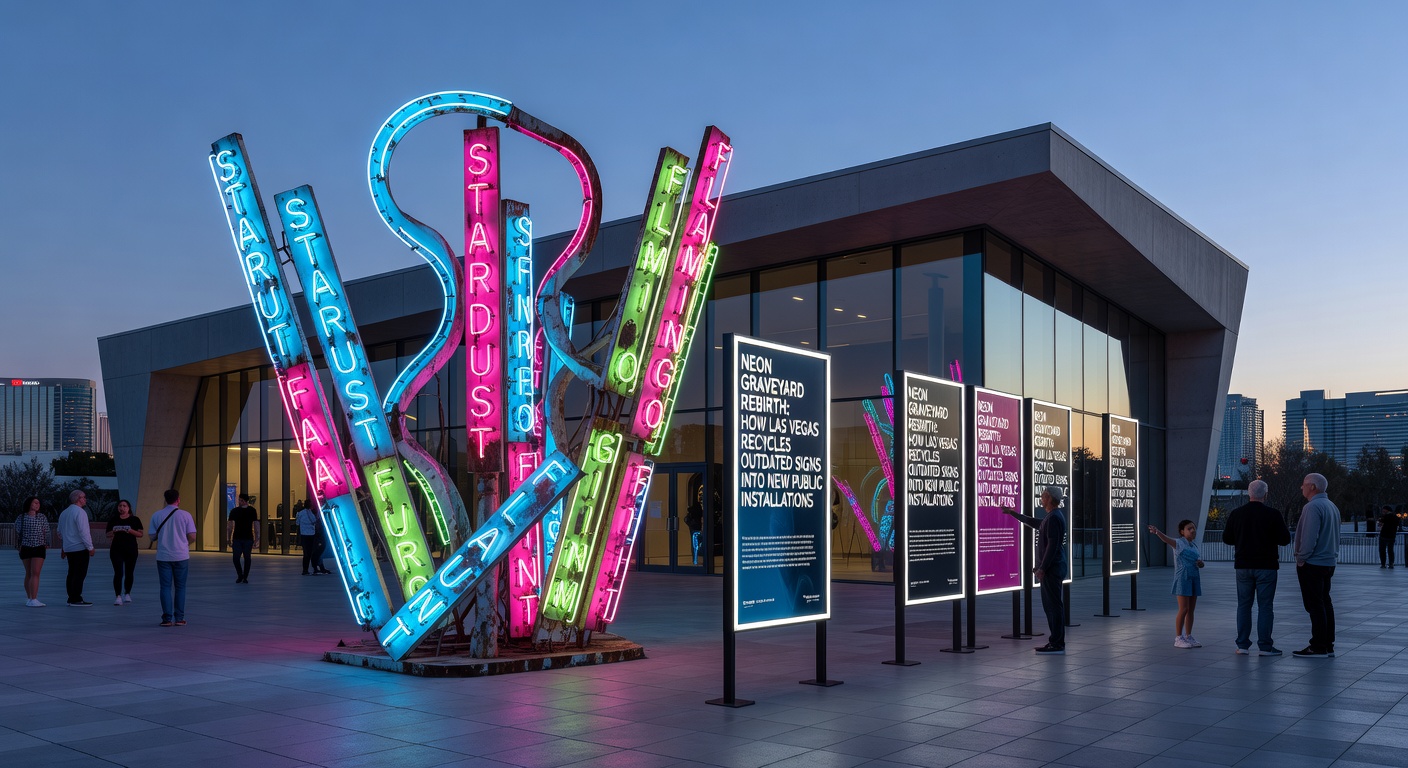
One documented case involved the relocation of lettering from the original Stardust sign into a shaded plaza near the Arts District, where the preserved pieces now form part of a larger sculptural arrangement that includes interpretive panels explaining the sign's original placement on the Strip. Similar projects have placed elements from the Moulin Rouge and Silver Slipper in neighborhood gateways, creating visual continuity between historic entertainment zones and residential areas.
Public Installation Projects and Community Integration
Municipal planners have integrated repurposed signage into several completed sites, including the illuminated gateway at the entrance to the Las Vegas Medical District and a series of freestanding displays along the Las Vegas Boulevard pedestrian bridge. These installations receive power through dedicated circuits tied to nearby street lighting grids, and maintenance schedules align with existing public works contracts rather than requiring specialized crews.
Figures released by the Nevada Department of Transportation indicate that such projects have contributed to a measurable increase in foot traffic at certain intersections, although the primary goal remains cultural preservation rather than traffic engineering. Educational components accompany many new displays, with QR codes linking visitors to archival photographs and timelines hosted by local historical archives.
Planned Expansions Through 2026
Planning documents approved in late 2024 outline additional installations scheduled for completion before June 2026, including a multi-panel arrangement near the forthcoming expansion of the Las Vegas Convention Center campus. Selection committees composed of city staff, museum curators, and neighborhood representatives review proposals quarterly to ensure that chosen signs reflect diverse periods of the city's entertainment history.
Funding for these efforts draws from a combination of hotel room tax allocations, private foundation grants, and occasional federal historic preservation credits administered through the National Park Service. Coordination meetings occur monthly to align restoration timelines with construction schedules at each target site.
Conclusion
Las Vegas continues to refine its approach to neon signage management by treating decommissioned pieces as resources rather than waste. The systematic movement of materials from the Boneyard into public spaces creates layered visual references across the urban environment while meeting contemporary standards for safety and energy efficiency. Ongoing documentation and cross-departmental planning support the steady expansion of these installations through the middle of the decade.