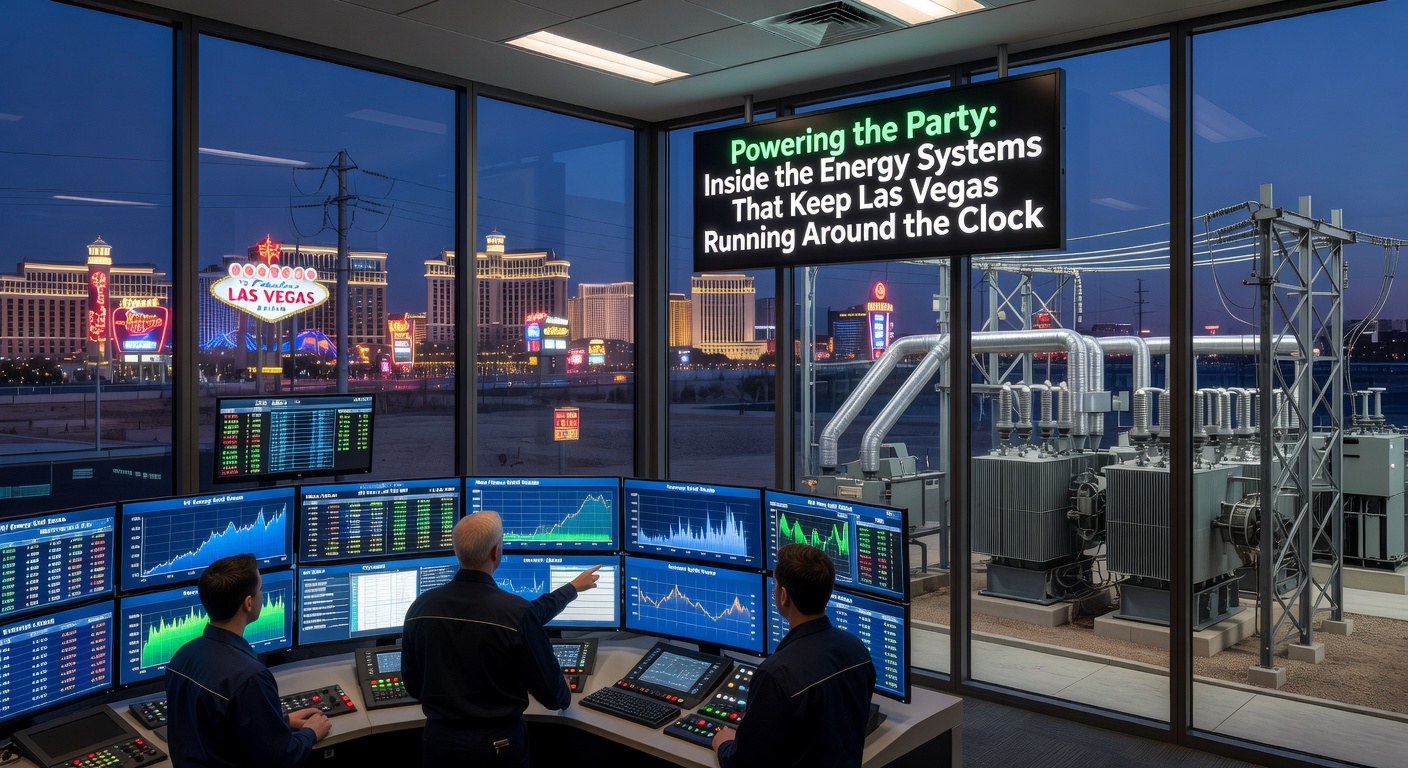
Powering the Party: Inside the Energy Systems That Keep Las Vegas Running Around the Clock
Las Vegas operates on a scale that demands constant power delivery because its resorts, casinos, and entertainment venues run nonstop while the desert climate adds layers of cooling requirements that push systems to their limits. The city draws from a mix of hydroelectric sources originating at Hoover Dam along with natural gas plants and growing solar installations spread across southern Nevada, and this combination supports the round-the-clock activity that defines the destination.
Grid Foundations and Daily Loads
NV Energy manages the primary distribution network that serves the Las Vegas Valley where data from state reports show peak summer demands climbing above 6,000 megawatts largely due to air conditioning across thousands of hotel rooms and expansive gaming floors. Observers note that transmission lines feed directly into major properties on the Strip while substations located throughout the metro area maintain stability during sudden spikes from events or conventions. Those who've studied regional patterns point out that evening hours bring the highest simultaneous use of lighting systems and shows yet the infrastructure handles these surges through automated load balancing that prevents widespread outages.
Backup generators stand ready at most large facilities because even brief interruptions carry high costs for operators who rely on continuous operation. Engineers have incorporated redundant feeds from multiple substations so that a single line failure does not halt operations across an entire resort complex. What's notable is how these measures evolved over decades as the city expanded from its early days when hydroelectric output from the Colorado River formed the core supply to the present setup that blends legacy assets with newer renewable additions.
Renewable Integration and Efficiency Upgrades
Nevada has added substantial solar capacity in recent years with large arrays in the Mojave region feeding clean power into the same grid that supports Las Vegas tourism. Reports from the U.S. Energy Information Administration indicate that renewables now account for a rising share of in-state generation while utilities track progress toward statutory targets set by state legislation. Energy Information Administration data on Nevada highlights how utility-scale projects contribute during daylight hours and pair with battery storage that extends availability into evening peaks when visitor activity remains intense.
Property managers at major resorts have installed LED lighting retrofits and advanced building management systems that reduce overall consumption without altering guest experiences. These upgrades connect to broader industry efforts documented in reports from organizations such as the American Council for an Energy-Efficient Economy where case studies detail measurable drops in kilowatt-hour usage per square foot across comparable hospitality portfolios. Turns out that such improvements also lower operational expenses which allows reinvestment into further efficiency measures while the desert sun continues to supply an abundant resource for on-site and remote solar arrays.

Challenges of Continuous Operation
High temperatures year-round create steady cooling loads that compound the baseline demand from gaming machines, kitchens, and water features yet operators have responded with chilled water loops and thermal storage tanks that shift some usage to off-peak periods. Grid planners coordinate with the Western Electricity Coordinating Council to balance imports and exports across state lines because Nevada sits within an interconnected western market that can supply additional resources during extreme weather events. Those monitoring long-term trends observe that population growth alongside tourism recovery continues to test capacity margins although investments in smart grid technology provide real-time visibility that helps prevent imbalances.
Maintenance schedules for critical equipment receive careful timing so that work occurs during lower-demand windows while redundant systems keep everything online. The reality is that any lapse in coordination could affect not only casinos but also surrounding residential neighborhoods and businesses that depend on the same transmission backbone.
Developments Anticipated for 2026
Planning documents outline several renewable and storage projects slated for completion phases around May 2026 including expanded battery installations that will store midday solar output for later release. State agencies continue to review interconnection requests for additional solar facilities in the southern part of the state while utilities refine demand-response programs that reward large customers for temporary load reductions during system stress. These steps align with existing renewable portfolio standards and build on earlier installations that already contribute measurable percentages to the overall mix serving the Las Vegas area.
Conclusion
Energy systems supporting Las Vegas integrate traditional hydroelectric resources with expanding solar generation and efficiency technologies to sustain nonstop activity across the metro region. Ongoing additions to storage capacity and grid modernization address both current loads and anticipated growth through 2026 and beyond. Data from regulatory and industry sources confirm steady progress toward diversified supply that maintains reliability for residents and visitors alike while adapting to desert conditions and evolving consumption patterns.