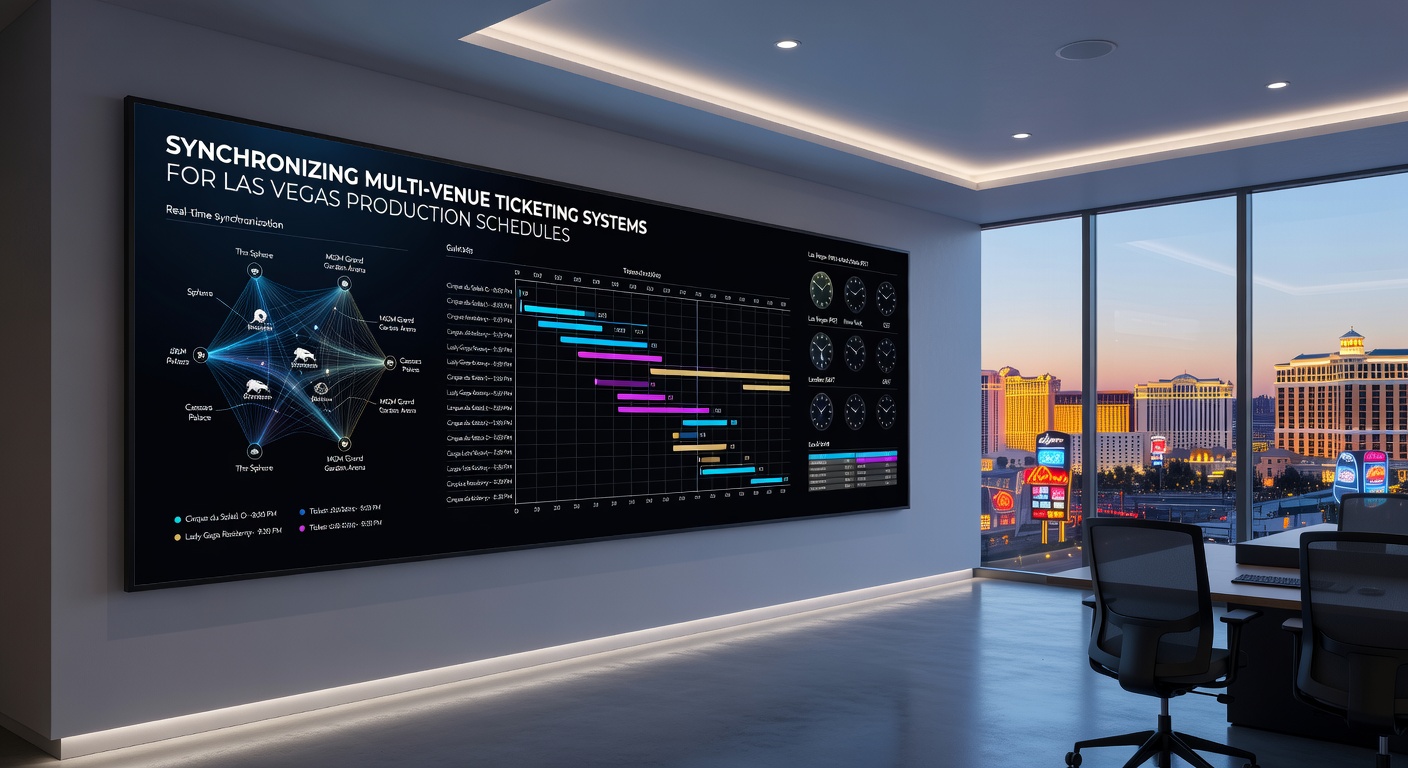
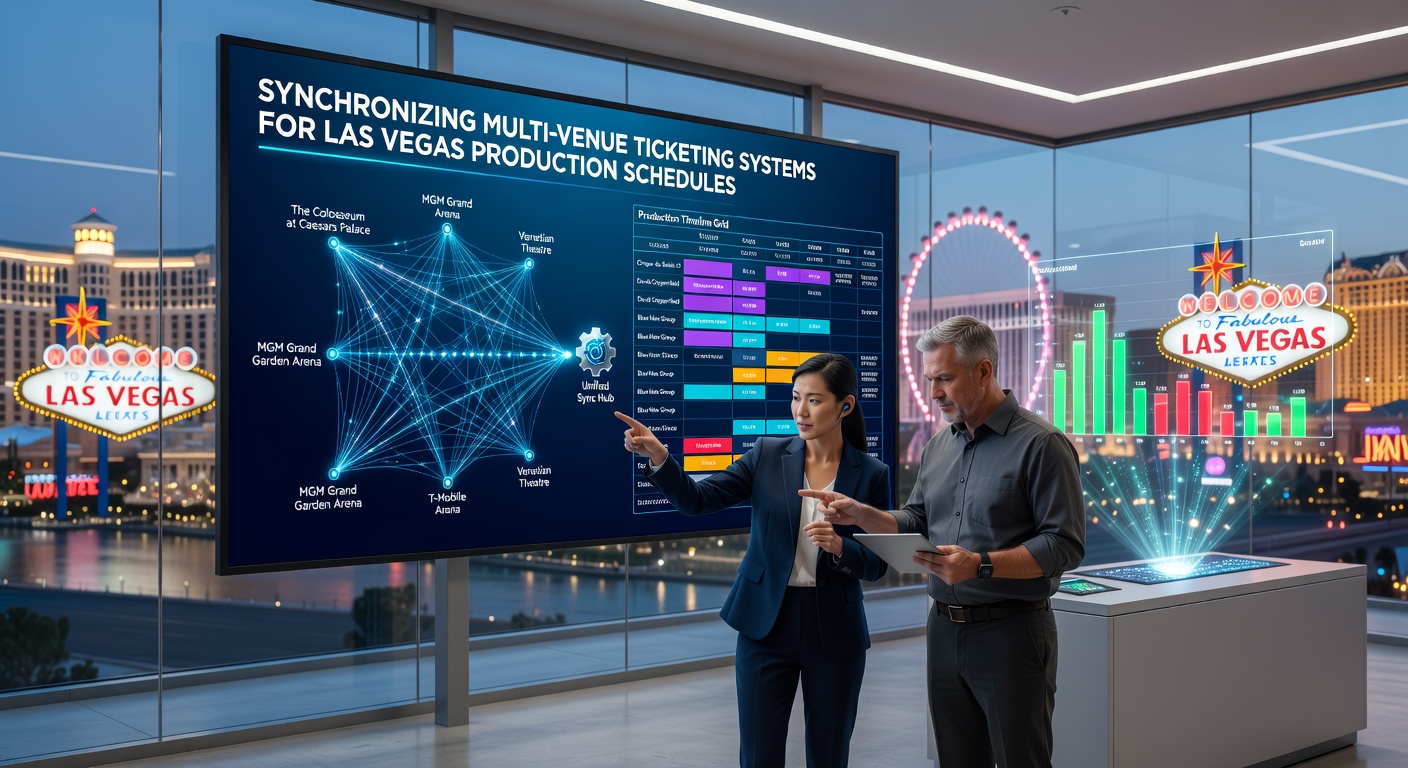
Synchronizing Multi-Venue Ticketing Systems for Las Vegas Production Schedules
Las Vegas production schedules demand precise coordination across dozens of venues because shows often share talent, crews, and overlapping run dates that stretch from the Strip to downtown and even out to suburban arenas, while ticketing platforms must align inventory to prevent overselling and maintain accurate availability for audiences who move between performances in a single trip.
Core Challenges in Multi-Venue Coordination
Production teams handle simultaneous events at properties such as the Colosseum at Caesars Palace, the Zappos Theater at Planet Hollywood, and the Michelob Ultra Arena at Mandalay Bay, and each location runs its own base reservation system that must feed into a central synchronization layer to reflect real-time seat maps, pricing tiers, and accessibility options without manual reconciliation that introduces delays.
Data indicates that major productions frequently schedule 12 to 18 performances per week across two or more sites, so operators rely on application programming interfaces that push updates every few minutes to avoid conflicts when a headliner adds an extra show or when technical rehearsals force a venue change.
Technology Platforms Driving Integration
Systems built around cloud-based ticketing engines allow operators to map shared resources such as lighting rigs and stage crews onto a unified calendar, and industry reports from the U.S. Travel Association show that venues adopting these platforms reduced scheduling errors by measurable percentages in recent seasons while expanding capacity for dynamic pricing that responds to demand across the entire market rather than isolated sites.
One implementation at a major Strip resort group connected its legacy point-of-sale terminals to newer cloud services so that a ticket purchased for a Friday night residency automatically blocks the corresponding seat block at a related after-party event held at a partner venue three blocks away, and this linkage extends to mobile check-in systems that scan once for entry across both locations.
Operational Workflows in Practice
Production managers begin each planning cycle by uploading draft schedules into a master database that cross-references venue availability, artist contracts, and union rules, after which automated scripts flag potential overlaps and generate revised timelines that account for load-in times and strike periods between shows.
Observers note that these workflows become especially critical during peak periods when multiple residencies run concurrently, and the synchronization layer also manages group sales, comp tickets, and hospitality packages so that a single purchase confirmation reflects correct seating across all booked venues without requiring separate transactions.
Regulatory and Data-Sharing Considerations
Nevada gaming authorities require detailed reporting on ticket sales when events tie into casino promotions, and the synchronized platforms export anonymized transaction data that satisfies compliance needs while preserving customer privacy standards set by state and federal guidelines, whereas similar frameworks appear in reports from Canadian tourism research groups that examine cross-border entertainment flows.
Additional safeguards include encryption protocols that protect payment information during inter-system transfers, and operators test these connections through scheduled drills that simulate high-volume sales spikes such as those expected around major holiday weekends and festival tie-ins.
Looking Ahead to May 2026
Industry calendars list several large-scale productions scheduled to debut or expand in May 2026, including multi-venue series that will test upgraded synchronization modules designed to handle increased mobile and international ticket purchases, and preliminary tests conducted by venue technology teams already show improved latency when routing inventory updates across properties separated by several miles.
These enhancements build on existing partnerships with software vendors who supply the underlying architecture, and they incorporate lessons from earlier rollouts where real-time adjustments prevented duplicate reservations during last-minute schedule shifts caused by weather or performer availability changes.
Conclusion
Synchronized ticketing across Las Vegas venues continues to evolve through incremental upgrades that connect legacy systems with newer cloud services, and the resulting infrastructure supports the complex production calendars that define the city's entertainment offerings while meeting operational, regulatory, and customer expectations in a single integrated flow.