The Choreography of Crowds: Pedestrian Flow Management Strategies on Las Vegas Walkways During Peak Seasons
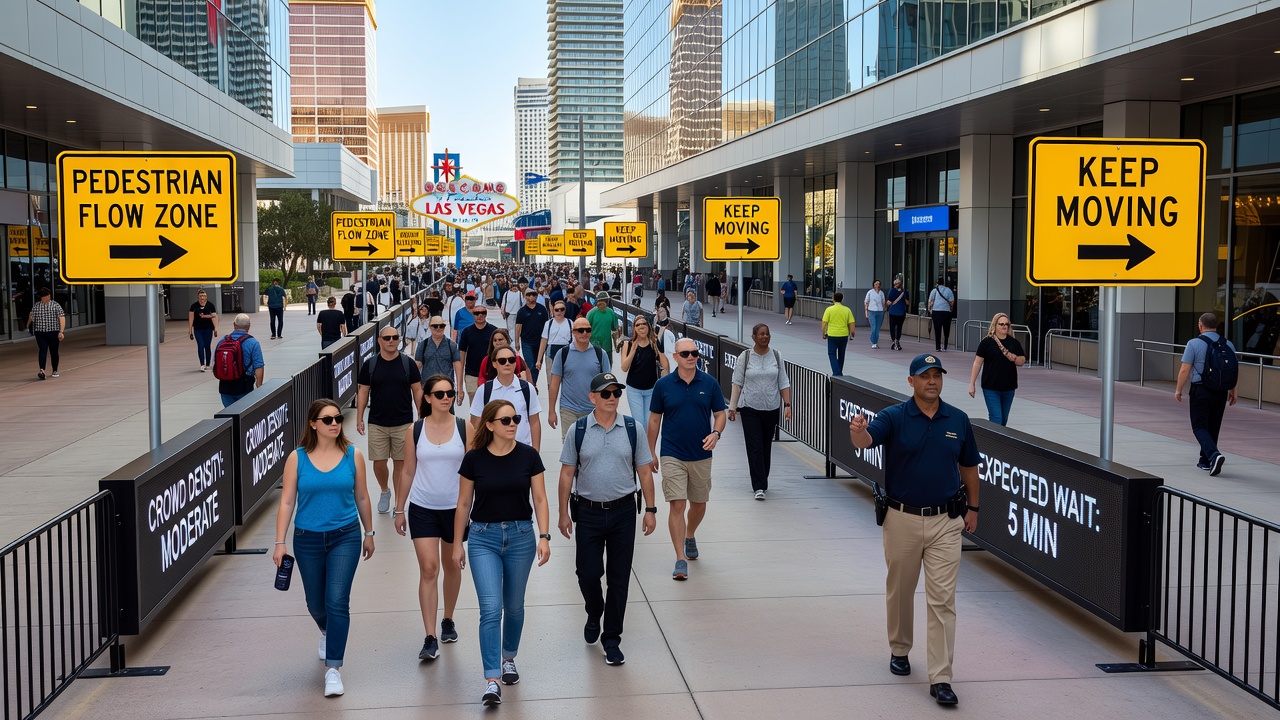
Las Vegas maintains extensive pedestrian infrastructure along the Strip and surrounding corridors where millions of visitors move each day, and peak seasons bring concentrated flows that require precise coordination between city agencies, resort operators, and event planners. Data from the Las Vegas Metropolitan Police Department shows pedestrian volumes can exceed 100,000 people per hour on major sidewalks during high-traffic periods, prompting layered management techniques that include physical channeling, timed signal adjustments, and dynamic staffing.
Physical Infrastructure and Channeling Techniques
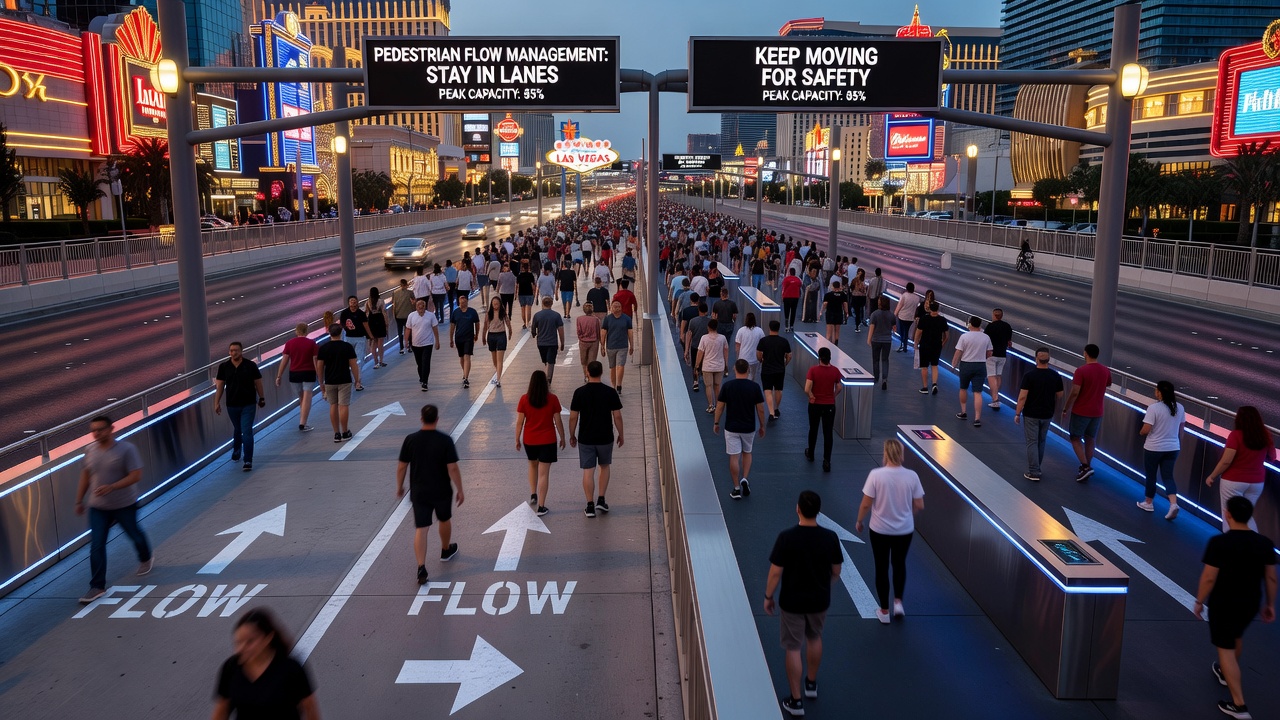
Authorities deploy temporary barriers, stanchions, and raised walkways at key intersections such as Flamingo Road and Harmon Avenue to separate incoming and outgoing foot traffic, while permanent pedestrian bridges over Las Vegas Boulevard reduce street-level crossings by an estimated 40 percent during busy evenings. These structures connect directly to resort entrances and integrate with casino floor plans so that visitors transition indoors without creating bottlenecks at ground level. Maintenance crews inspect and reposition these elements daily based on expected event schedules, ensuring they align with shuttle drop-off points and taxi stands.
Technology Integration and Real-Time Adjustments
Traffic management centers monitor camera feeds and sensor data to adjust crosswalk timings and activate overhead message boards that direct flows toward less congested routes. During July 2026, when multiple conventions and holiday weekend events overlap, operators plan to increase staffing at these centers and test predictive algorithms that forecast surges from hotel check-in patterns and flight arrivals. Such systems draw on models developed through partnerships with research institutions including the University of Nevada, Las Vegas transportation engineering department, where studies have quantified how minor signal changes can reduce average crossing wait times by up to 25 percent.
Coordination with Events and Seasonal Patterns
Event organizers submit detailed attendee projections to the Clark County Department of Public Works weeks in advance, allowing planners to pre-position additional personnel and temporary fencing around venues like the Las Vegas Convention Center and nearby resorts. Peak summer months see extended daylight hours that stretch pedestrian activity into later evenings, so lighting upgrades and reflective markings on walkways help maintain visibility while directional staff use handheld devices to communicate shifting crowd densities. Observers note that these preparations often include collaboration with neighboring municipalities such as the City of Henderson, whose transit operators adjust bus frequencies to pull excess foot traffic away from core Strip corridors.
Staffing Models and Safety Protocols
Private security teams from individual properties work alongside public officers under unified command structures during major gatherings, with shared radio channels enabling rapid response to emerging pinch points. Training programs emphasize de-escalation techniques and wayfinding assistance rather than enforcement alone, and data collected by the Nevada Resort Association indicates that proactive guidance reduces incident reports by measurable margins each season. Emergency medical posts remain stationed at regular intervals along high-volume segments, stocked according to historical call volumes from similar events.
Future Enhancements and Ongoing Evaluation
City planners continue to evaluate expansions such as additional elevated walkways and integrated mobile applications that provide real-time routing suggestions based on live sensor inputs. A report from Australia's Roads and Maritime Services highlights comparable strategies used in Sydney during large-scale festivals, offering benchmarks for Las Vegas officials seeking to refine their own approaches. Pilot programs scheduled for late 2026 will measure the impact of these tools on overall throughput and visitor satisfaction metrics.
Conclusion
Effective pedestrian flow management on Las Vegas walkways relies on the integration of physical design, technological monitoring, inter-agency coordination, and adaptive staffing that scales with seasonal demand. These combined measures allow the city to accommodate large visitor volumes while preserving safety and accessibility across its primary corridors.