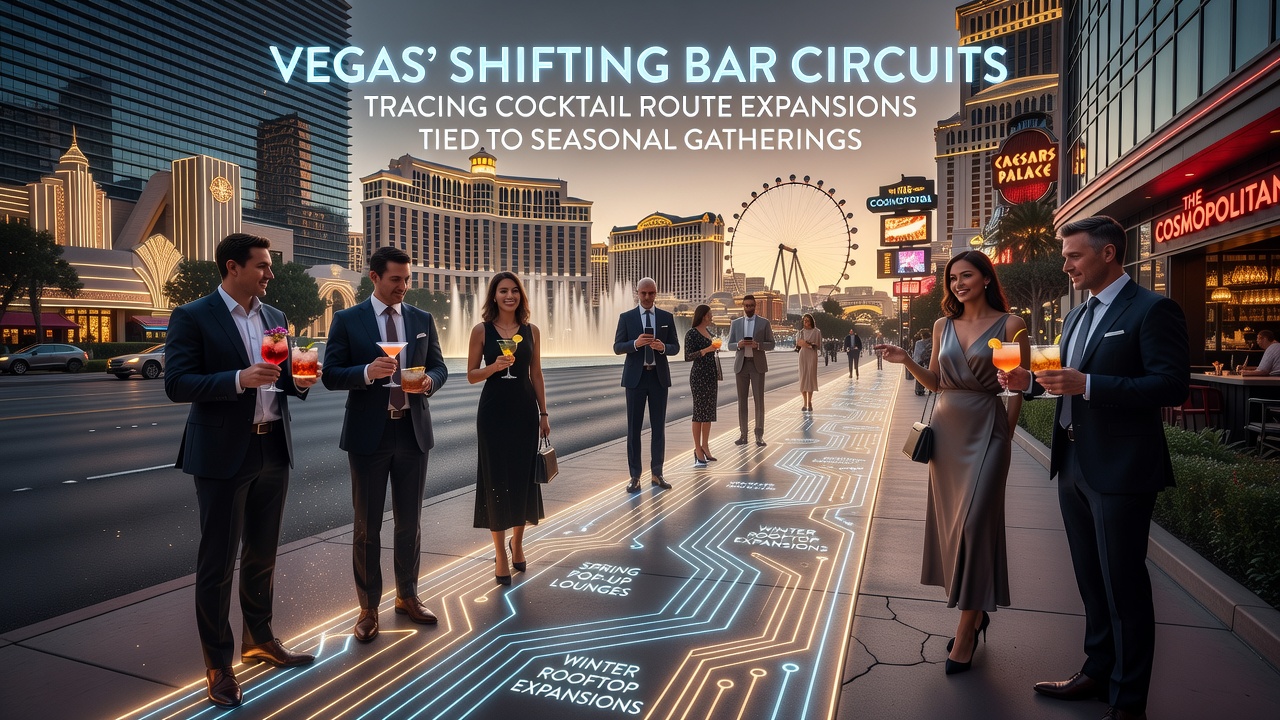
Vegas' Shifting Bar Circuits: Tracing Cocktail Route Expansions Tied to Seasonal Gatherings
Las Vegas maintains an evolving network of bar circuits where cocktail routes expand and contract in response to seasonal gatherings that draw visitors throughout the year. These circuits connect venues through mapped pathways that shift as events alter foot traffic patterns and demand for specific drinks. Observers note that major conventions, holidays, and festivals prompt operators to add temporary stops and adjust operating hours to accommodate surges in attendance.
Core Structure of Las Vegas Bar Circuits
Bar circuits in Las Vegas function as interconnected routes that link downtown lounges with Strip establishments and off-strip neighborhoods. Data from the Las Vegas Convention and Visitors Authority shows that these pathways typically span between eight and twelve venues per circuit during standard periods. Operators coordinate with transportation services to maintain flow between locations while accounting for peak hours that align with convention schedules and entertainment programming. Researchers at the University of Nevada, Las Vegas have documented how circuit maps incorporate real-time adjustments based on attendee demographics and preferred beverage trends.
Seasonal Influences Driving Route Expansions
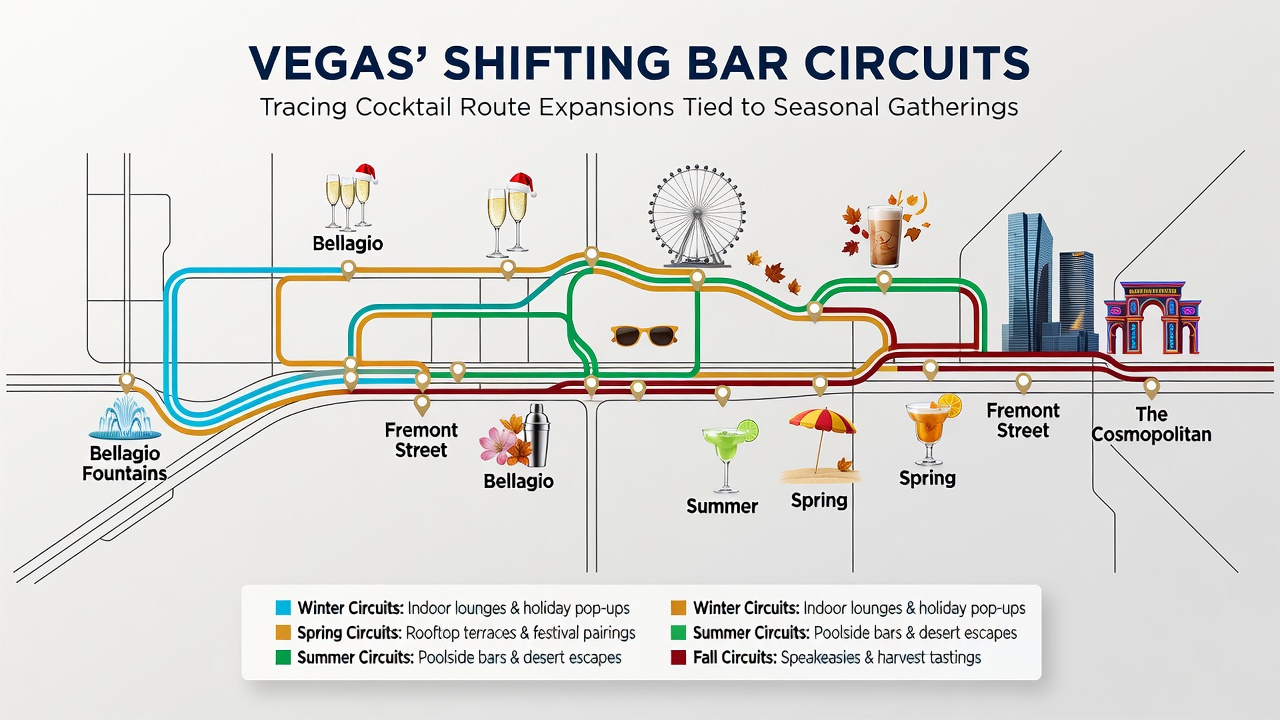
Winter months bring expansions tied to large-scale conventions such as CES and major trade shows that increase demand for after-hours venues. Summer gatherings around music festivals and Independence Day celebrations extend routes into residential districts where pop-up bars operate alongside established locations. Fall events including rodeo weekends and harvest-themed promotions create new connections between Chinatown eateries and downtown cocktail spots. These shifts occur because seasonal visitor volumes alter both the number of active participants and the duration of each circuit segment.
Operators track attendance figures from events hosted by the Las Vegas Convention Center to determine when additional venues should join existing routes. Figures reveal that circuit lengths can increase by up to forty percent during high-traffic periods as new stops open to handle overflow crowds. Beverage suppliers adjust delivery schedules accordingly to support the expanded networks without disrupting service continuity.
Integration with Specific Seasonal Gatherings
Event organizers coordinate with bar associations to incorporate seasonal themes into circuit designs. Halloween gatherings prompt routes that feature haunted-themed stops while spring break periods expand pathways toward poolside venues. Each gathering type influences the selection of signature drinks and the pacing of route segments. Studies conducted by hospitality research groups indicate that these integrations result in measurable increases in venue participation rates during targeted weeks.
June 2026 projections from industry reports anticipate further route adjustments around summer music festivals and corporate retreats scheduled throughout that month. Planners expect additional stops in the Arts District to manage anticipated attendance levels while maintaining connections to central Strip locations. Supply chain data shows that beverage distributors have already begun preparing inventory allocations for these anticipated expansions.
Operational Adjustments and Logistics
Venue managers implement staffing changes and inventory modifications when circuits expand. Transportation partners increase shuttle frequencies between stops during peak seasonal windows. Regulatory bodies including the Nevada Gaming Control Board oversee compliance aspects related to extended operating permits that accompany these expansions. Those who monitor circuit performance report that successful adjustments depend on coordination between multiple stakeholders rather than isolated venue decisions.
Technology platforms assist in mapping updated routes and communicating changes to participants. These systems display real-time availability and estimated wait times at each stop along the circuit. Data collected from these platforms helps operators refine future expansions based on actual usage patterns rather than projected estimates alone.
Conclusion
Las Vegas bar circuits continue to adapt through expansions that align with seasonal gatherings and their associated visitor patterns. The mechanisms supporting these shifts involve data analysis, stakeholder coordination, and logistical planning that respond to measurable changes in attendance. As events scheduled for periods such as June 2026 approach, operators maintain systems that allow circuits to scale efficiently while preserving service standards across participating venues.