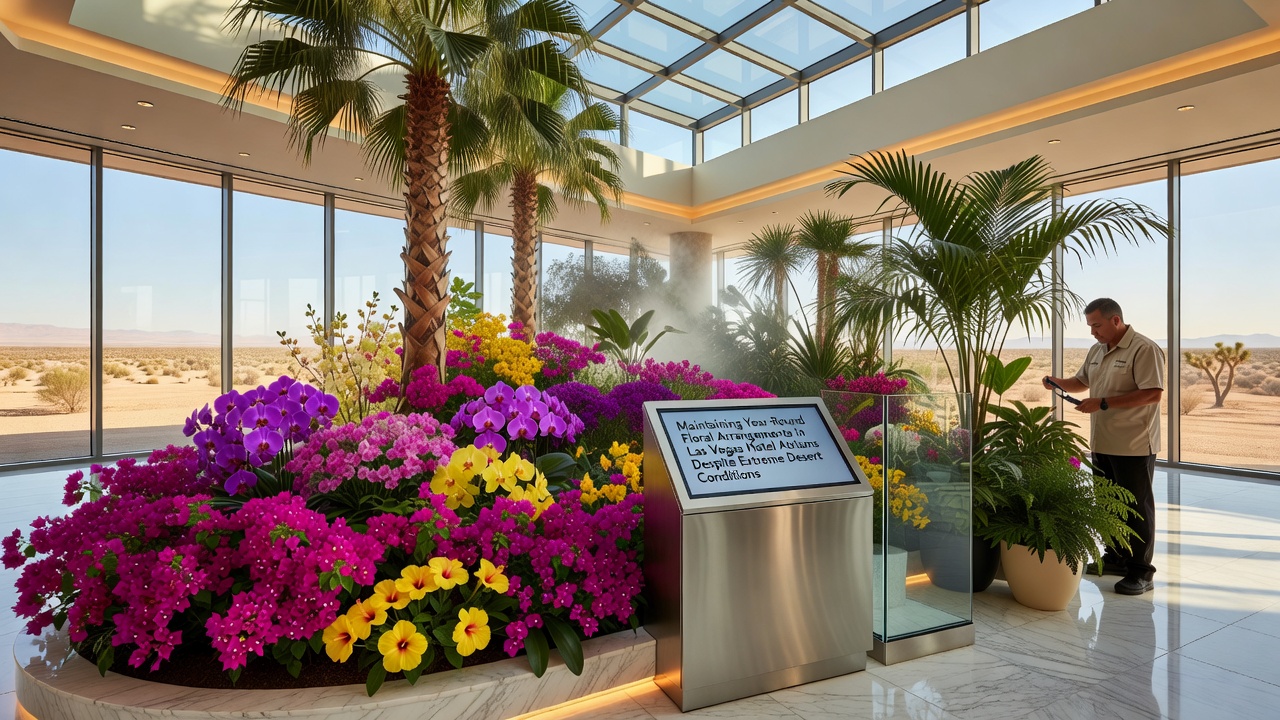
Year-Round Floral Displays in Las Vegas Hotel Atriums
Las Vegas hotel atriums maintain elaborate floral arrangements throughout the year even as outside temperatures climb past 110 degrees Fahrenheit during summer months and humidity drops below 10 percent in the surrounding Mojave Desert, and horticultural teams achieve this through integrated climate control, specialized plant selections, and water-efficient delivery methods that operate continuously.
Environmental Challenges in Desert Atriums
Intense solar radiation, extreme diurnal temperature swings, and persistent aridity create constant stress on living plant material inside these large enclosed spaces, yet atriums at major resorts use double-pane glass with low-emissivity coatings that reduce heat gain by up to 40 percent according to building performance data from the U.S. Department of Energy. Daily ultraviolet exposure remains high even through filtered glazing, which accelerates leaf scorch and flower fade in many species, and maintenance crews therefore rotate displays on schedules that account for bloom lifespan under these conditions.
Plant Selection Strategies
Resort horticulturists choose hybrid varieties and cultivars bred for heat tolerance and lower light requirements, combining orchids, bromeliads, and anthuriums that perform well under artificial illumination with succulents and desert natives that anchor larger installations. These selections allow displays to remain fresh for weeks rather than days, and growers often source material from nurseries in similar arid climates to ensure genetic adaptation before installation occurs.
Climate and Lighting Systems
Advanced HVAC configurations maintain atrium temperatures between 68 and 78 degrees Fahrenheit with relative humidity levels held near 50 percent through evaporative humidification tied to occupancy sensors, while supplemental LED arrays tuned to full-spectrum outputs deliver 12 to 16 hours of daily light during winter months when natural daylight shortens. Automated shading louvers positioned above the glass canopy activate when outdoor readings exceed 100 degrees, reducing cooling loads and protecting delicate petals from direct sun.
Irrigation and Water Management
Drip and micro-mist systems deliver precise volumes of recycled water drawn from on-site treatment facilities that process thousands of gallons daily, and sensors embedded in soil media trigger cycles only when moisture thresholds drop below set points. This approach aligns with conservation guidelines outlined by the Southern Nevada Water Authority, which tracks resort usage across the valley and reports measurable reductions in potable demand through closed-loop recycling. Nutrients are injected at low concentrations through fertigation lines to support continuous growth without salt buildup that desert water sources can introduce.
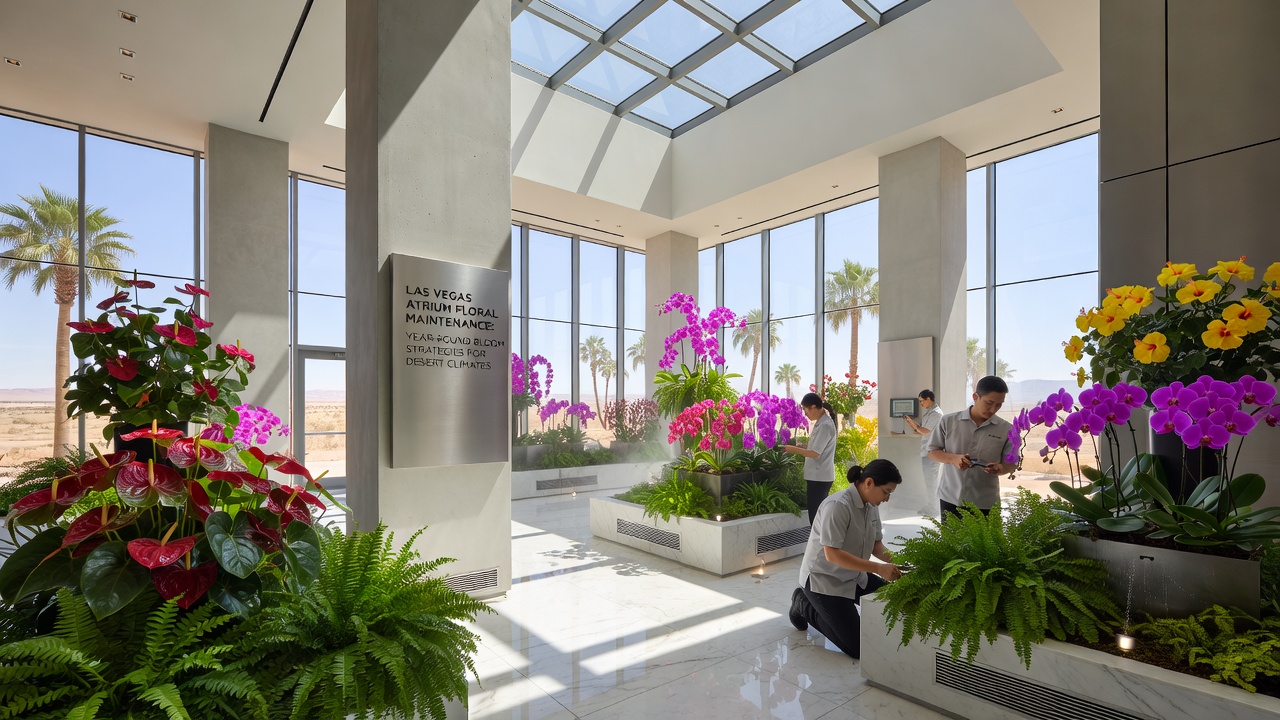
Teams monitor conductivity and pH daily, adjusting solutions to prevent root stress while minimizing waste, and overflow collection channels route excess moisture back into holding tanks for filtration and reuse.
Maintenance Routines and Seasonal Adjustments
Professional crews conduct daily inspections that include deadheading, pest scouting, and pruning to keep arrangements dense and disease-free, while weekly deep cleaning removes dust that accumulates rapidly in low-humidity environments. During peak summer periods in July 2026, additional misting cycles activate automatically when sensors detect spikes above baseline evapotranspiration rates, and replacement plants grown in on-site or nearby greenhouses are staged for immediate swap-outs to preserve visual continuity. Winter schedules shift focus toward supplemental lighting duration and reduced watering frequency because cooler nights slow metabolic rates in the selected species.
Integrated Technology and Staffing
Centralized building management platforms integrate environmental data with inventory tracking so supervisors can forecast replacement needs weeks ahead, and specialized training programs through organizations such as the American Society for Horticultural Science prepare staff to recognize early signs of stress unique to atrium conditions. Collaboration between engineering, housekeeping, and horticulture departments ensures that airflow patterns from nearby casino floors do not desiccate displays or introduce contaminants that affect petal longevity.
Conclusion
Resorts in Las Vegas sustain continuous floral displays in their atriums by combining climate engineering, water recycling infrastructure, and horticultural expertise tailored to desert extremes, and these systems operate year-round without interruption while supporting the visual standards expected by visitors. Ongoing refinements in sensor technology and plant breeding continue to extend display durations and lower resource consumption across the hospitality sector.